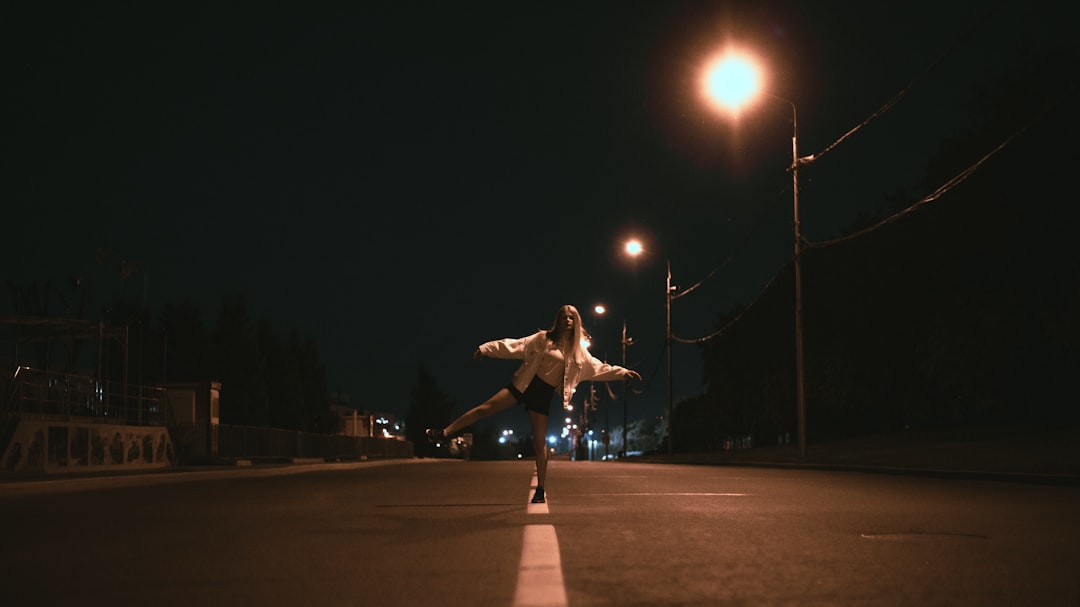
The house lights dim. Your pulse accelerates against your ribs. You've rehearsed this solo for months—every angle precise, every transition mapped to the score. Yet as you take your starting position, something feels mechanical, withheld. The audience settles into their seats, waiting. You know how to move. The question is whether you can make them feel something.
This gap between technical execution and transformative performance defines the contemporary dancer's central challenge. Mastery of alignment, dynamics, and musicality creates the foundation, but it cannot substitute for presence—the quality that transforms a sequence of movements into an experience that lingers in the viewer's body long after the final blackout.
Why Technique Alone Falls Short
Contemporary dance education often privileges the external: corrections in the mirror, video analysis, the pursuit of "clean" lines. These tools develop necessary skills, yet they can paradoxically distance dancers from the very expressivity that drew them to the form. Research published in Dance Research Journal (2019) found that dancers who focused exclusively on technical precision during performance preparation showed measurably lower audience engagement scores than those who incorporated embodied narrative practices.
The problem isn't competence. It's translation. Your body knows the choreography. The task is teaching it to communicate.
Part I: Internal Preparation—Building the Embodied Source
From Abstract Emotion to Physical Information
Storytelling in contemporary dance rarely requires literal narrative. Instead, it demands specificity of intention—what choreographer Bill T. Jones calls "the why behind the what." Without this anchor, movement reads as decorative rather than urgent.
Practice: The Thirty-Second Transformation
Take a short phrase you know intimately. Perform it three times with distinct emotional directives:
- First pass: Resignation—shoulders weighted, gaze lowered, breath suspended at the top of inhalation
- Second pass: Defiance—spine lengthened against gravity, focus sharp and forward, initiating from the sternum rather than the limbs
- Third pass: Ambivalence—contradictory signals, the body pulling in multiple directions simultaneously
Note what changes beyond obvious gesture. Where does your weight shift? How does your relationship to time alter? These physical signatures become your vocabulary of expression.
Somatic Grounding: Beyond "Journaling"
Generic advice to "connect with your emotions" fails dancers because it remains cerebral. Established somatic practices offer structured alternatives:
- Authentic Movement: Twenty minutes of eyes-closed improvisation, witnessing your own impulses without shaping them, followed by written or drawn reflection. Developed by Mary Starks Whitehouse, this practice builds tolerance for uncomfortable affect and reveals unconscious movement preferences.
- Laban Effort Actions: Systematic exploration of Weight, Time, Space, and Flow combinations. Understanding your habitual "effort profile" allows you to strategically break it for dramatic effect.
- Gaga methodology: Ohad Naharin's approach of sensing rather than executing, cultivating availability in the body before imposing form.
Choose one practice. Commit to it for six weeks. The goal isn't catharsis but range—expanding your capacity to hold and transmit complex states.
Part II: External Engagement—Creating the Circuit
The Architecture of Attention
Audience connection operates through calibrated focus, not constant eye contact. Consider your gaze as a design element:
| Focus Placement | Effect | Application |
|---|---|---|
| Back wall/upper corners | Expansiveness, invocation | Large gestures, opening statements |
| Specific individuals | Intimacy, risk, confrontation | Solo moments of vulnerability |
| Internal (soft focus, peripheral vision available) | Mystery, interiority | Transitional or reflective passages |
| Floor/horizon line | Groundedness, historical weight | Rooted, weighted movement |
Project intention through your eyes even when they're closed. The audience perceives the quality of your attention more than its direction.
Environmental Intelligence
Site-specific and black-box performances demand different skills than proscenium work. Pina Bausch's dancers famously rehearsed in the actual spaces of her epic works—parking lots, cafeterias, streets—allowing architecture to reshape their relationship to gravity and proximity. When you cannot control your environment, you must increase your adaptability.
Practical considerations:
- Lighting: Locate your key light during tech rehearsal. Know where shadows fall and how they alter your perceived shape.
- Sound: If using recorded music, memorize its structure so completely that you can adjust to acoustic variations without conscious thought.
- Surface: Rehearse in shoes similar to performance conditions. A sprung floor versus concrete changes everything about available velocity.
Part III: Rehearsal as Research
Intentional Repetition
Mindless repetition ingrains habit without deepening meaning. Structure your practice sessions with deliberate constraints:
Week 1–2: Technical accuracy with full score Week 3: Exaggerated dynamics—push










