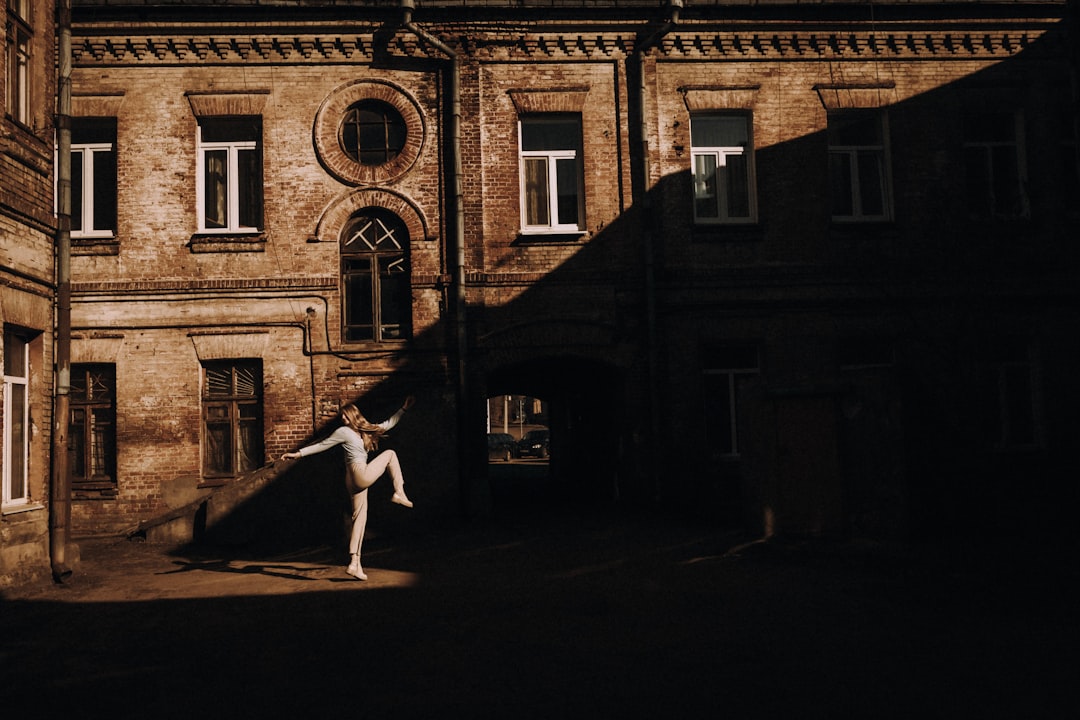
The first time I improvised in a contemporary dance class, I froze. The teacher said "go," and my mind went blank. I stood there, arms heavy, convinced everyone could see my panic. Then someone brushed past me—rolling across the floor, laughing at their own momentum—and I realized: improvisation isn't about being interesting. It's about being present.
That shift changed everything. Improvisation isn't a talent you either have or lack. It's a trainable skill that transforms how you relate to your body, your creativity, and the stage itself.
What Improvisation Actually Means in Contemporary Dance
In contemporary dance, improvisation is the practice of generating movement in real time without predetermined choreography. But this definition misses the nuance that distinguishes dance improvisation from, say, jazz soloing or theatrical spontaneity.
As choreographer William Forsythe notes, improvisation is not "making it up" but "making it visible"—revealing choices your body already knows. Contemporary dance traditions from Merce Cunningham's chance procedures to Trisha Brown's accumulation structures to contact improvisation have treated spontaneity not as chaos, but as a system with its own logic.
You might improvise to:
- Generate material for choreography
- Deepen your somatic awareness
- Train present-moment responsiveness for performance
- Build ensemble connection in group work
Each purpose demands different approaches. Solo improvisation in the studio differs radically from improvising with a partner, or from structured improvisation where tasks constrain your choices (imagine: "move only your spine, responding to the bass line").
Why Improvisation Transforms Your Dancing
You Discover Movement Your Conscious Mind Wouldn't Plan
Choreography relies on decision-making. Improvisation relies on response. When you stop planning and start attending—to gravity, breath, the space behind you, the memory that surfaces unexpectedly—you access what somatic practitioner Joan Skinner called "the body as teacher."
Try this: Set a timer for three minutes. Move continuously without repeating any phrase. Notice what emerges when you cannot rely on habit. That surprise? That's the material choreography rarely finds.
You Build Somatic Intelligence
Improvisation demands that you listen inward and outward simultaneously. You track proprioception (where you are in space), interoception (internal sensations), and exteroception (environmental stimuli) while constructing coherent movement.
This multi-layered attention develops what dancers call "availability"—the capacity to adjust in milliseconds, to recover from imbalance, to ride momentum rather than force it. These skills transfer directly to set choreography, making you more adaptable and less injury-prone.
You Perform With Authentic Responsiveness
Stage fright often stems from the gap between planned performance and actual experience. Improvisation practice narrows this gap. You learn to meet whatever arises—missed counts, slippery floors, unexpected emotion—with curiosity rather than catastrophe.
How to Practice: From First Steps to Deep Exploration
Start With Constraints, Not Freedom
Paradoxically, beginners often improvise more freely with limitations. Try these entry points:
| Constraint | Practice |
|---|---|
| Quality | Move as if through honey (resistance), then as if your bones are hollow (lightness). Notice how the same gesture—an arm reaching—transforms. |
| Body part | Improvise using only your spine. Then only your feet. Then find how they dialogue. |
| Space | Stay within a one-meter square. Expand to fill the entire room. Notice how scale changes your choices. |
| Relationship | Face a partner without touching. Let their rhythm infiltrate yours. |
Work With Scores, Not Silence
"Just improvise" can feel paralyzing. Instead, use a score—a set of instructions that structure your exploration:
- Nancy Stark Smith's "The Underscore": A long-form improvisation protocol with distinct phases (arriving, settling, engaging disengagement)
- Gaga technique: Ohad Naharin's language of imagery ("float your bones," "move from your lava") that channels improvisation through specific somatic prompts
- Forsythe's improvisation technologies: Algorithmic tools like "lines" (tracing pathways through space) or "inhibition" (interrupting habitual patterns)
Document Strategically
Recording yourself is valuable but hazardous. Many dancers fixate on appearance rather than process.
What to look for:
- Patterns you didn't notice (always starting with the right side? always ending low?)
- Moments of genuine surprise—where did they come from?
- Transitions: how do you move from floor to standing, from stillness to motion?
Protective practice: Watch without sound first, focusing on spatial relationships. Then listen without watching, attending to rhythm and breath. This dissociates you from the "mirror