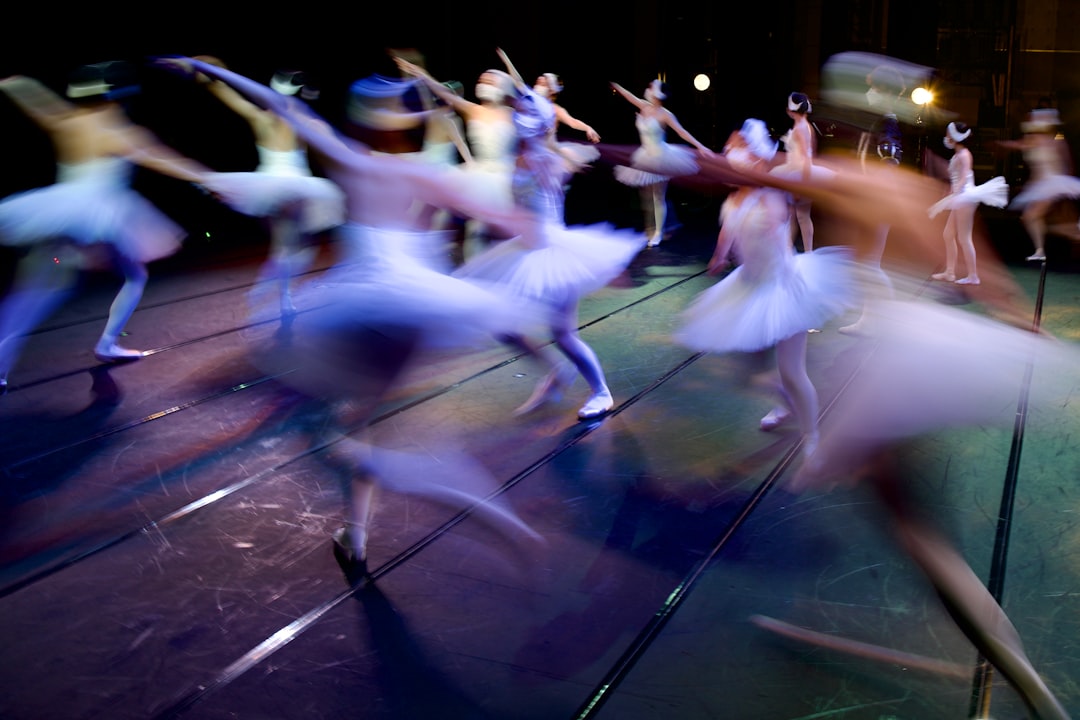
You've learned the cross, the walk, and the basic turn. You can navigate a crowded milonga floor without panic. Yet something's missing—that effortless flow you see in advanced dancers, the way they seem to create the music rather than follow it. Welcome to the intermediate plateau, where most tango dancers stall for years.
This guide offers specific, actionable techniques to break through. No generic "practice more" advice. No vague encouragement to "feel the music." Just the technical and conceptual skills that separate competent dancers from compelling ones.
The Ocho: Mastering Dissociation, Not Just Footwork
The ocho—literally "eight" for the figure-eight pattern traced on the floor—remains misunderstood at intermediate levels. Most dancers focus on the feet while neglecting the engine that drives them: dissociación, the independent rotation of your upper body from your hips.
Forward Ochos (Primarily Followers)
- The technique: Rotate your torso toward your partner while keeping your hips stable and your weight centered over your standing leg
- The timing: Delay your response slightly. This elastic tension—leader's intention, follower's delayed reaction—creates tango's characteristic suspension and release
- Common error: Stepping before completing torso rotation, which produces rushed, mechanical ochos
Back Ochos (Both Roles)
- For leaders: Initiate through torso rotation and subtle weight shifts, not arm-leading. Your right hand provides frame; it doesn't push or pull
- For followers: Maintain your axis throughout. Imagine your spine as a vertical rod rotating within your hips—no tilting, no reaching
Practice progression: Single ocho on the slow beat → continuous ochos → ochos with pauses (suspension on beat 3) → ochos into other movements
The Embrace: Architecture of Connection
A functional embrace differs fundamentally by role. Understanding this prevents the common intermediate trap: confusing tension with connection.
For Leaders
| Element | Purpose | Common Mistake |
|---|---|---|
| Right arm | Provides consistent frame, guides direction | Gripping or micromanaging the follower's movement |
| Left hand | Maintains spatial reference, communicates intention | Collapsing elbow or inconsistent contact |
| Center position | Slightly forward, projecting clear intention | Leaning back, forcing the follower to chase connection |
For Followers
- Match, don't mirror: Your tone should be responsive to your leader's, but maintain your own structural integrity
- Axis is non-negotiable: A relaxed embrace doesn't mean collapsed posture. Your weight remains over your own feet—no hanging, no anticipating
- The active follow: Connection flows both ways. Your back provides information about your balance and readiness; your right arm receives and interprets intention
Experimentation framework: Try three embraces in one practice session—close embrace (chest-to-chest), open embrace (V-shaped), and flexible (shifting between). Note which allows clearest communication for which movements.
Musicality: From Counting to Conversing
"Listen to the music" fails as advice because tango music contains multiple, often conflicting, rhythmic layers. Intermediate dancers need ear training, not encouragement.
Three Rhythmic Structures to Master
Marcato
- The strong 2-4 beat pattern underlying most tango
- Practice: Walk single time, stepping only on beats 2 and 4. Feel the grounded, deliberate quality
Sincopa
- The anticipated beat that creates suspension—often the "and" before the main beat
- Practice: Step on 1, hold through 2, step on the "and" before 3. This delayed resolution drives tango's emotional tension
Contratiempo
- Off-beat syncopation, common in milonga and faster tangos
- Practice: Triple steps (quick-quick-slow) that land between main beats
Progressive Listening Curriculum
| Stage | Orchestra | Focus |
|---|---|---|
| Weeks 1-2 | Di Sarli (instrumentals) | Clear marcato, predictable phrasing |
| Weeks 3-4 | Troilo (early) | Sincopa patterns, bandoneón accents |
| Weeks 5-6 | Pugliese | Melodic complexity, rubato (flexible timing) |
| Ongoing | Mixed orchestras | Identifying structure within 30 seconds |
Integration exercise: Dance the same sequence—say, a basic turn with ochos—to three different recordings. Force yourself to match each orchestra's character: Di Sarli's elegance, Troilo's drive, Pugliese's drama.
Developing Style: Constraint as Creativity
"Find your own style" paralyzes because it offers no starting point. Style emerges from technical constraints deliberately chosen and mastered.