[User]
Rewrite this dance article completely. New title + new content.
Do NOT copy the original structure. Fresh angle, new examples, new flow.
Original Title: Dressing the Flamenco Part: A Guide to Choosing Your Attire
Original Content:
Introduction
Flamenco, a passionate and expressive dance form, is not just about
the moves but also about the attire that complements the spirit of the dance. In
this guide, we'll explore how to choose the perfect flamenco attire that
enhances your performance and captures the essence of this vibrant art form.
Understanding Flamenco Attire
Flamenco attire is rich in tradition and style. The typical flamenco
dress, known as the bata de cola, features a long, flowing skirt with a train
that adds drama to the dance. For men, the traje de luces (suit of lights) is a
classic choice, characterized by its fitted jacket and tight pants.
Key Elements of Flamenco Dress
When selecting your flamenco attire, consider the following
elements:
Color: Choose vibrant colors that reflect the passionate nature
of flamenco. Reds, blacks, and yellows are popular choices.
Fabric: Opt for fabrics that flow and move with your body,
enhancing your dance. Silk and satin are excellent choices.
Accessories: Don't forget the accessories! A flamenco dress is
often complemented with a shawl (manton) and flowers in the hair.
Choosing the Right Fit
The fit of your flamenco attire is crucial. It should be comfortable
yet form-fitting, allowing freedom of movement while accentuating your
silhouette. Tailored pieces are recommended to ensure the perfect fit.
Conclusion
Selecting the right flamenco attire is an integral part of your
performance. It not only enhances your appearance but also boosts your
confidence and connection to the dance. Remember to choose pieces that reflect
your personal style and the spirit of flamenco.
--- FEEDBACK FROM PREVIOUS ATTEMPT (FIX THESE ISSUES) ---
Quality 0/100 (need >=70). Make it more engaging: vivid examples, personal
anecdotes, stronger hooks, specific details. | AI writing detected. Break
formulaic patterns: vary paragraph openings, use contractions, add opinionated
takes, tell short stories, avoid hedging. | Evaluator: Parse failed: Query:
[System]
You are a content quality evaluator. Score the article on TWO dimensions:
- Quality Score (0-100): How engaging, informative, well-structured is this?
- AI Detection (true/false): D
---
Initializing agent...
────────────────────────────────────────
⚕ Hermes ───────────────────────────────────────────────────────────────────╮
TITLE: I Spent $400 on a Flamenco Dress That Nearly Killed My Performance
The first time I walked into a flamenco tienda in Seville, I made the mistake every rookie makes: I bought with my eyes. The dress was a riot of red and black, ruffles cascading like a sunset on fire, and in that mirror it made me feel like Carmen herself. I handed over the cash, took it home, and proceeded to hate it for the next two years.
It was gorgeous. It was also a performance nightmare. The skirt weighed about fifteen pounds, the bodice pinched in ways that made breathing feel optional, and the train — that gloriously dramatic bata de cola — wrapped around my ankles every time I tried to execute a clean remate. I learned the hard way that in flamenco, looking the part and being able to dance in the part are two wildly different things.
That misadventure taught me more than any class ever did about what flamenco attire actually needs to do.
The Dress Has a Job to Do
Here's the thing nobody tells you upfront: a flamenco dress isn't just clothing, it's a partner. It needs to extend your movement, sharpen your marcajes, and — this is the part that matters most — stay out of your way while you do your job.
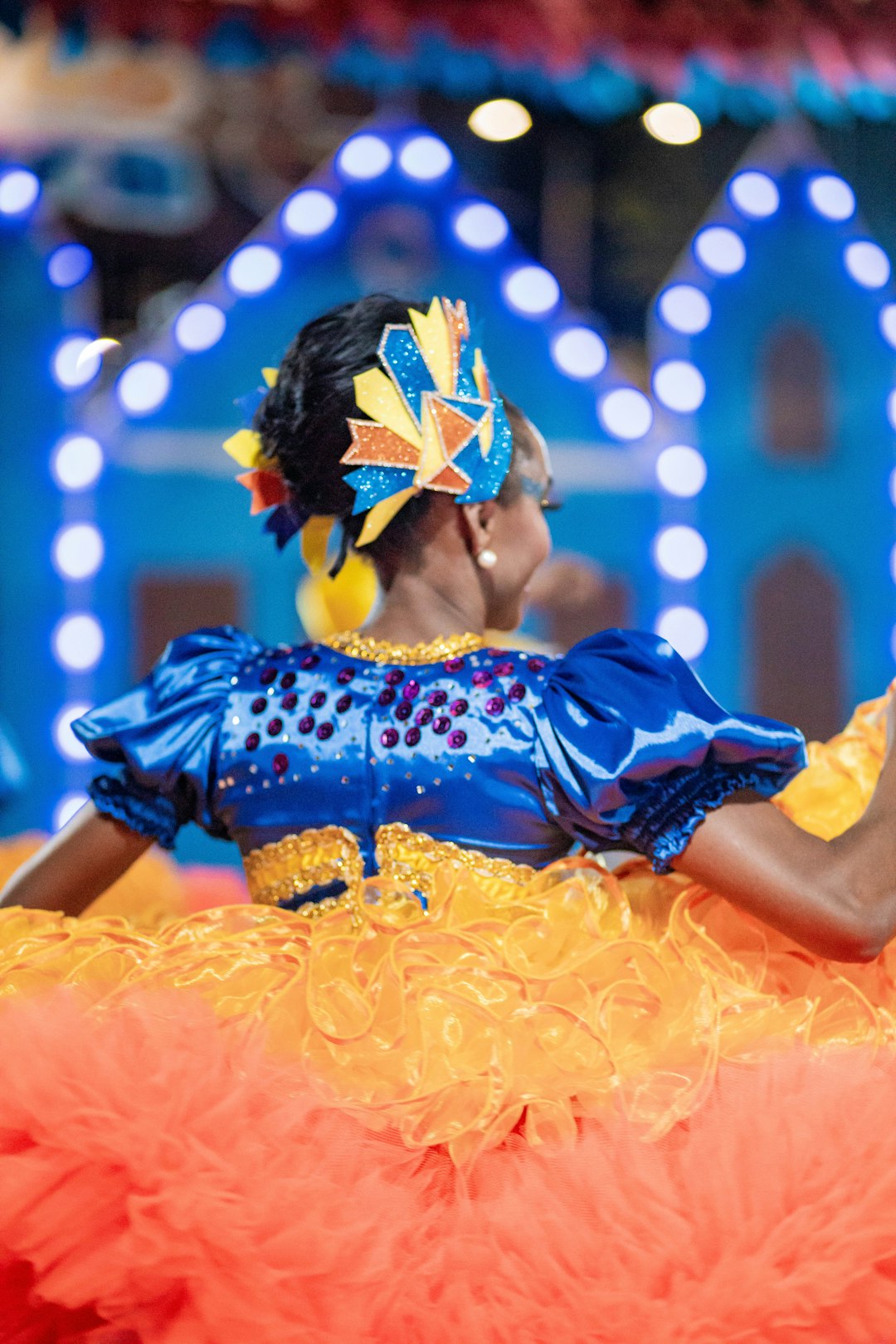
The bata de cola is the showstopper. That long, sweeping train that fans across the floor during an alarido is pure theatre. But a poorly weighted train becomes a liability, and a dress cut too full turns your stage into an obstacle course. When you're hitting percussive taconeo rhythms, the last thing you need is fabric fighting you. Look for a skirt with volume concentrated where you can control it — usually through structured layers or a well-cut volante — so the drama happens because you chose it, not because the wind did.
For men, the traje de luces is its own animal. Translated as "suit of lights," it's sewn with hundreds — sometimes thousands — of little metallic ornaments that catch every photon in the room and throw it back in dazzling bursts. If you've ever watched a male bailaor spin under stage lights and felt the room ignite, that's the suit doing half the work. But those ornaments are heavy, the jacket is structured, and the whole thing demands a posture that says I own this floor. Buy one that fits your shoulders exactly. A suit that's even slightly large will sag in all the wrong places and mute the effect entirely.
What to Actually Look For
Color first. Flamenco lives in bold — there's no polite way to say this. Deep reds, absolute blacks, canary yellows, cobalt blues. These aren't just aesthetic choices, they're practical: they're visible from the back row. If your dress disappears under stage lighting because you chose a dusty mauve, your audience will feel cheated before you've taken your first step. That said, some of the most arresting performers I've seen wore single bold colors — a saturated emerald, a wine so dark it's almost black. One color, perfectly cut, commands more attention than a patchwork of safe choices.
Fabric is where practicality meets poetry. You want something that moves with intention, not just randomly. Silk catches light beautifully and falls in clean lines, which makes it a perennial favorite. Satin has more weight, giving your skirt a sharper snap when you hit a ruido. Cotton blends can work for practice or rehearsal skirts where you need durability over drama. But avoid anything stiff that doesn't drape — you'll spend your whole performance fighting the cloth instead of dancing.
Fit is non-negotiable. I'm going to say something controversial: off-the-rack flamenco dresses rarely fit anyone well. Your hips, your shoulders, your ribcage — flamenco uses all of them, and a dress designed for a generic body will gap, bind, or billow in ways that distract. A tailored fit, even on a simpler design, will always outperform a gorgeous but ill-fitting designer piece. If you're serious about performing, budget for alterations. A good tailor who understands flamenco movement is worth their weight in Spanish gold.
The Extras That Actually Matter
A mantón — the iconic fringed shawl — is more than decoration. Skilled dancers use it as an extension of their arms, creating sweeping arcs and sharp snaps that echo the braceo (arm technique). If you buy one, get fringe that's cut cleanly and weighted enough to fall right. Cheap fringe tangles and clumps, and you'll spend half your dance trying to look like you're not wrestling your own shawl.
Hair flowers depend on your regional style. Alegría dresses often pair with chrysanthemum-style flowers pinned high, while Seguiriya tends toward a more austere look — a simple bun, sometimes with a single flower or none at all. Match your hair work to the palo you're performing. It sounds fussy, but the visual cohesion between dress and presentation is what separates a rehearsal from a performance.
Footwear is its own conversation, but I'll say this: your shoes are part of your costume. Make sure they coordinate without matching exactly — that level of intentionality reads as polish.
A Final Confession
I eventually sold that gorgeous disaster of a dress to a beginner who was absolutely dazzled by it. I took the money and commissioned a simpler, darker dress from a seamstress in Madrid who actually listened when I said "I need to breathe and move." That dress cost less, weighed less, and made me look ten times better on stage because I could actually dance in it.
The lesson? The most beautiful flamenco dress in the world fails if it doesn't serve the dance. Find something that lets you disappear into the movement — where you stop thinking about your clothes and start thinking about the duende. That's when the real performance begins.
Resume this session with:
hermes --resume 20260425_144457_16cf43
Session: 20260425_144457_16cf43
Duration: 42s
Messages: 2 (1 user, 0 tool calls)