The First Time That Skirt Spoke for Me
I still remember the first time I stepped onto the dance floor in a proper flamenco dress. It was midnight blue, heavier than I expected, and the ruffled skirt seemed to have a mind of its own. I was terrified it would tangle around my ankles. But the second the guitar started, something clicked. That bata de cola didn't just follow my movements—it amplified them. Every stamp of my foot sent the fabric flying. Every turn felt like I was drawing circles in the air. I wasn't just wearing a dress anymore. I had become part of the music.
That's the thing about flamenco fashion that gets lost in all the Pinterest boards and costume shop catalogs. Your outfit isn't decoration. It's a partner.
Color Is Personal, Not Prescriptive
Walk into any flamenco boutique and you'll see rows of red, black, and deep crimson screaming for attention. These are the classics, sure. But don't let anyone bully you into thinking those are your only options. I've seen dancers absolutely demolish a stage in emerald green, in electric violet, in mustard yellow that shouldn't work but somehow does.
The dancers who stand out aren't the ones playing it safe. They're the ones picking a shade that makes them feel slightly dangerous. If hot pink does that for you, wear the hot pink. The key is intensity, not conformity. Look for saturated tones that won't wash out under stage lights. And those patterns? Polka dots, oversized florals, geometric swirls—they all work if YOU love how they move when you spin.
Why Fabric Weight Is a Make-or-Break Detail
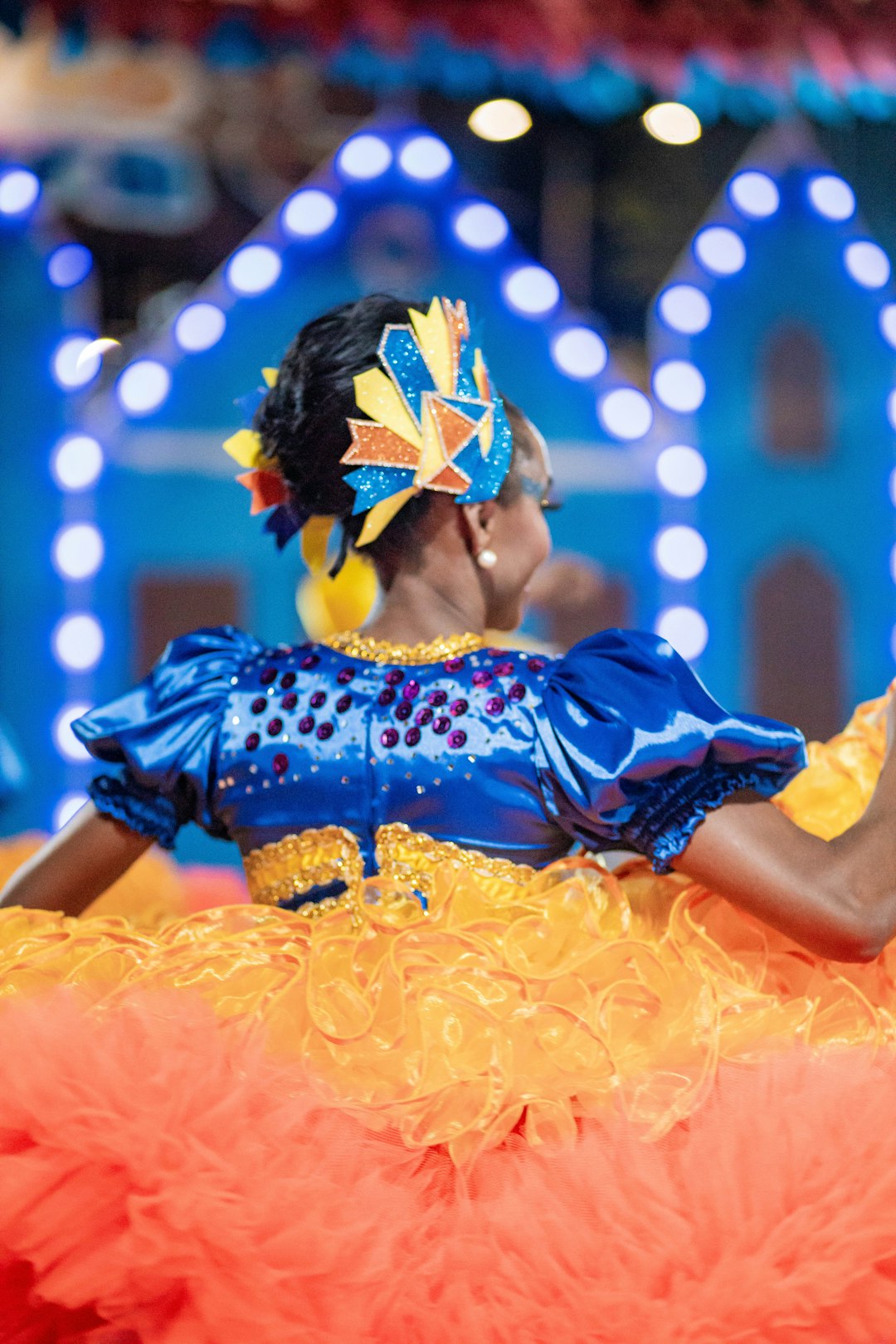
Here's a hard truth I learned after buying a cheap polyester number online: if your skirt is too light, it dies. Seriously. A flamenco skirt needs heft. Satin, taffeta, good quality cotton blends— these materials have the gravity to flare out when you whip around and the structure to keep those ruffles from collapsing into a sad heap.
You want volume, but controlled volume. Think bell shape, not balloon shape. When you hold the skirt at your sides and lift, it should create a frame around your legs, not a tent. Test this before you buy. Do a quick turn in the fitting room. If the hem doesn't float outward and then settle with a satisfying swoosh, keep looking.
The Top Half: Tight Enough to Matter
Your upper body in flamenco is doing serious work. The arm positions, the shoulder isolations, the way your torso drives the rhythm—all of it needs to be visible. A baggy blouse kills your lines faster than bad lighting.
Look for a fitted bodice, maybe with lace insets or subtle embroidery that catches the light when you raise your arms. It should feel snug but not suffocating. You need to breathe deeply—flamenco demands it. And if you're dancing with a bata de cola (that dramatic long train), your top needs to anchor the look so you don't disappear under all that fabric.
The Shawl and the Comb: Don't Skip These
I made this mistake once. Showed up to a show without my mantón de Manila because I thought it would be "too much." Big error. The shawl isn't an extra. It's an extension of your arms, a prop that adds texture to your port de bras, a splash of contrast against your dress.
And the peineta—that comb in your hair? It changes your silhouette entirely. It lifts your chin. It makes you carry yourself differently. Add a silk flower (a fresh one if you're feeling fancy) and suddenly you're not a person in a costume. You're a flamenco dancer.
Shoes That Talk Back
Your zapatos de baile are your instrument. The nails in the toe and heel aren't decorative; they're what let you hammer out rhythms sharp enough to cut glass. A good pair should fit like a glove from day one—don't believe anyone who says you need to "break them in" for months.
Check that the heel is secure, the straps don't dig, and the sound is clean and bright when you tap. Dull thuds mean the nails are worn or the sole is too soft. Your feet will thank you for investing here.
Hair and Face: Turn It Up
Flamenco is not the place for natural makeup. The lights eat your face. The distance between you and the audience swallows subtlety. Go bold with the eyes—think liner, lashes, shadow that defines. Lips should be strong: red, berry, deep rose.
For hair, the style needs to stay put through sweat and whiplash turns. A low bun with a comb woven in works. So does a sleek high ponytail with a flower pinned at the base. Loose strands will drive you insane by the second copla. Secure everything.
The Secret Fit Test
Before any performance, I do the sit test. Can I drop into a deep plié without ripping a seam? Can I raise both arms fully overhead without the bodice riding up? Can I spin three times without stepping on my train? If the answer to any of these is no, I fix it or I change.
Your dress should feel like a second skin that happens to look spectacular. Not a prison. Not a disguise.
When the Outfit Disappears
The best flamenco performance I ever gave wasn't the one with the most expensive dress. It was the night I stopped thinking about what I was wearing at all. The ruffles, the shawl, the heavy skirt with its perfect swoosh—they'd done their job so well that I forgot they existed. I was just there, in the music, stamping and turning and living inside the song.
That's what you're shopping for. Not a costume. A key that unlocks the version of you who doesn't hold back. Find the dress that does that, and the rest is just noise.