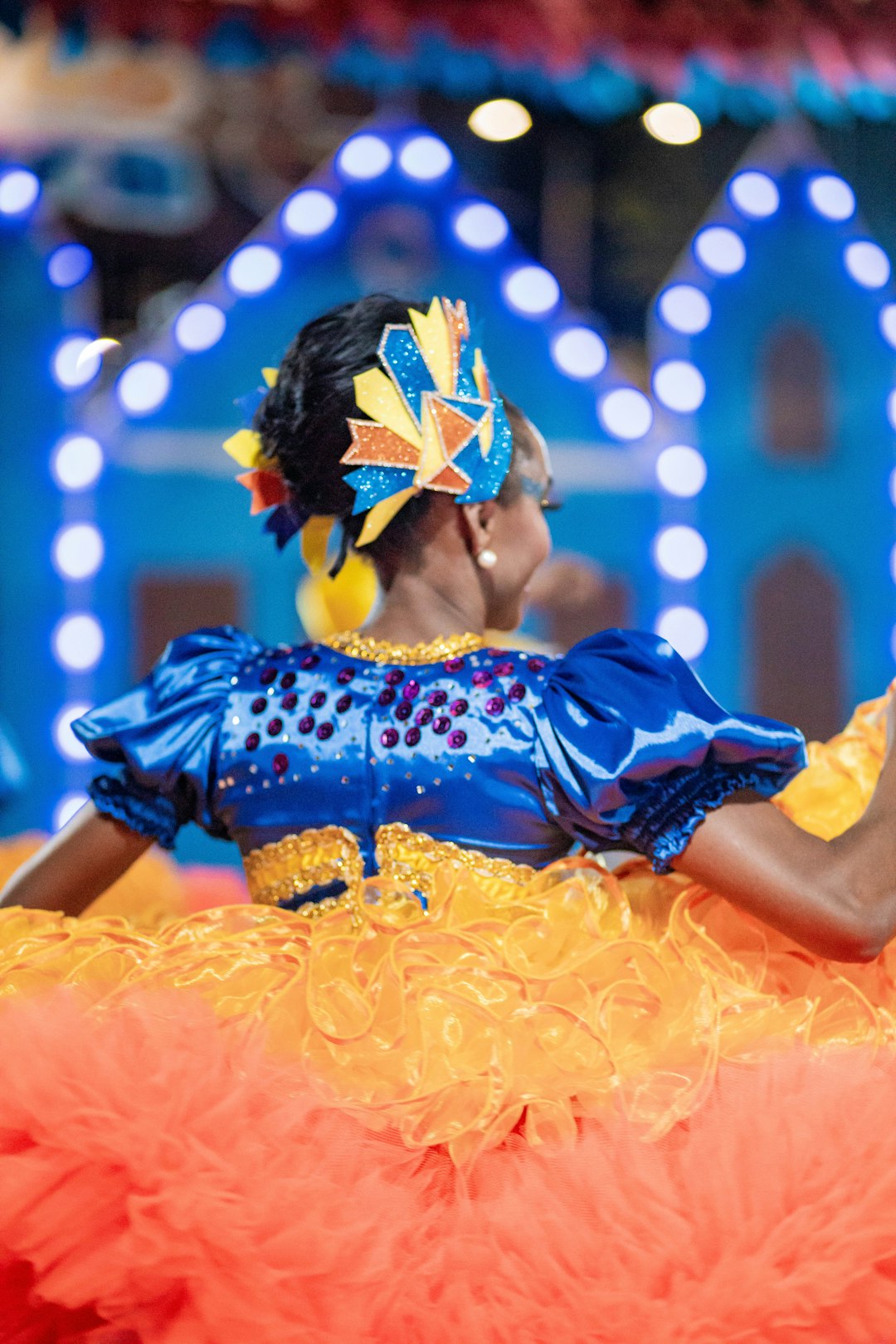
Flamenco has never been merely a dance. Born in the marginalized communities of Andalusia—Roma, Moorish, Jewish, and working-class Spanish—it carries centuries of resistance, sorrow, and transcendence. When this art form enters the frame, cinema must adapt to its demands. The result has been one of the most fascinating collaborations between live performance and mechanical reproduction: a century-long negotiation between flamenco's improvisational duende and film's fixed gaze.
The Early Frame: Flamenco and the "Españolada"
Long before Carlos Saura transformed flamenco into art-house prestige, Spanish cinema had already claimed it. From Cecil B. DeMille's 1915 Carmen through the Franco-era españolada films of the 1950s and 60s, flamenco functioned as exotic shorthand—castanets, ruffled skirts, and stylized passion for tourist consumption. These films flattened the form's complexity, stripping away its Roma roots and political edge to create a palatable national brand.
This history matters because later filmmakers would deliberately work against it. When Saura and Antonio Gades collaborated on their "flamenco trilogy" beginning with Blood Wedding (1981), they weren't simply documenting dance—they were reclaiming it from decades of folkloric distortion.
The Saura-Gades Revolution: Dance as Narrative
Carmen (1983) remains the most significant flamenco film ever made, not merely for its performances but for its structural intelligence. Saura constructs a film-within-a-film: Gades choreographs a flamenco Carmen while falling dangerously into the same jealous obsession that destroys his character. The rehearsal space becomes a psychological arena, with mirrors multiplying the dancers and the camera itself participating in the choreography.
Crucially, Saura and Gades jettison Bizet's orchestral score. In its place: cante jondo—the "deep song" of flamenco—with its microtonal vocal cries and percussive guitar. This isn't substitution but transformation. Where opera externalizes emotion through melody, flamenco interiorizes it through the body's relationship to rhythm. The camera, often in medium shots that preserve the dancers' spatial integrity, becomes a witness rather than an interpreter.
The trilogy continued with El Amor Brujo (1986) and Carmen's immediate predecessor, but Carmen endures because it solves the "proscenium problem"—how to film dance without theatrical distance—through narrative embedding. We are always aware of the performance's constructedness, which paradoxically heightens its emotional authenticity.
Beyond the Sacred: Flamenco in Mainstream Hands
Pedro Almodóvar approaches flamenco with altogether different instincts. In Women on the Verge of a Nervous Breakdown (1988), Pepa's flamenco sequence arrives at her lowest moment—a performance of defiance staged for an empty restaurant. The dance is technically imperfect, deliberately so. Almodóvar uses flamenco's iconography against itself: the bata de cola (trained dress), the dramatic poses, the gendered performance of Spanish femininity, all deployed with camp exaggeration that simultaneously celebrates and critiques.
This parodic dimension appears again in Talk to Her (2002), where Pina Bausch's Café Müller and a flamenco cantaor create a dialogue between German expressionist dance and Spanish popular tradition. Almodóvar understands what Saura suppresses: flamenco's vulnerability to kitsch, and the productive tension this creates.
The Border Crossers: Flamenco Unmoored
International filmmakers have exploited flamenco's cultural specificity while transforming its context. Tony Gatlif's Vengo (2000) returns flamenco to its Roma origins, filming juergas (spontaneous gatherings) in southern Spain with documentary immediacy. The camera here must surrender control—Gatlif's long takes accommodate the unpredictable structure of tablao performance, where singers, dancers, and palmas (hand-clappers) negotiate rhythm in real time.
Sally Potter's The Tango Lesson (1997) stages a different confrontation: flamenco versus tango as competing models of erotic and artistic exchange. When Pablo Verón's tango precision meets the flamenco dancer's aire (loose, improvisational quality), the film dramatizes a clash of cultural temperaments. Potter's camera, trained in her own dance background, captures the weight shift, the planta (foot placement), the moment when technique yields to something uncontrollable.
Mike Figgis's Flamenco Women (199