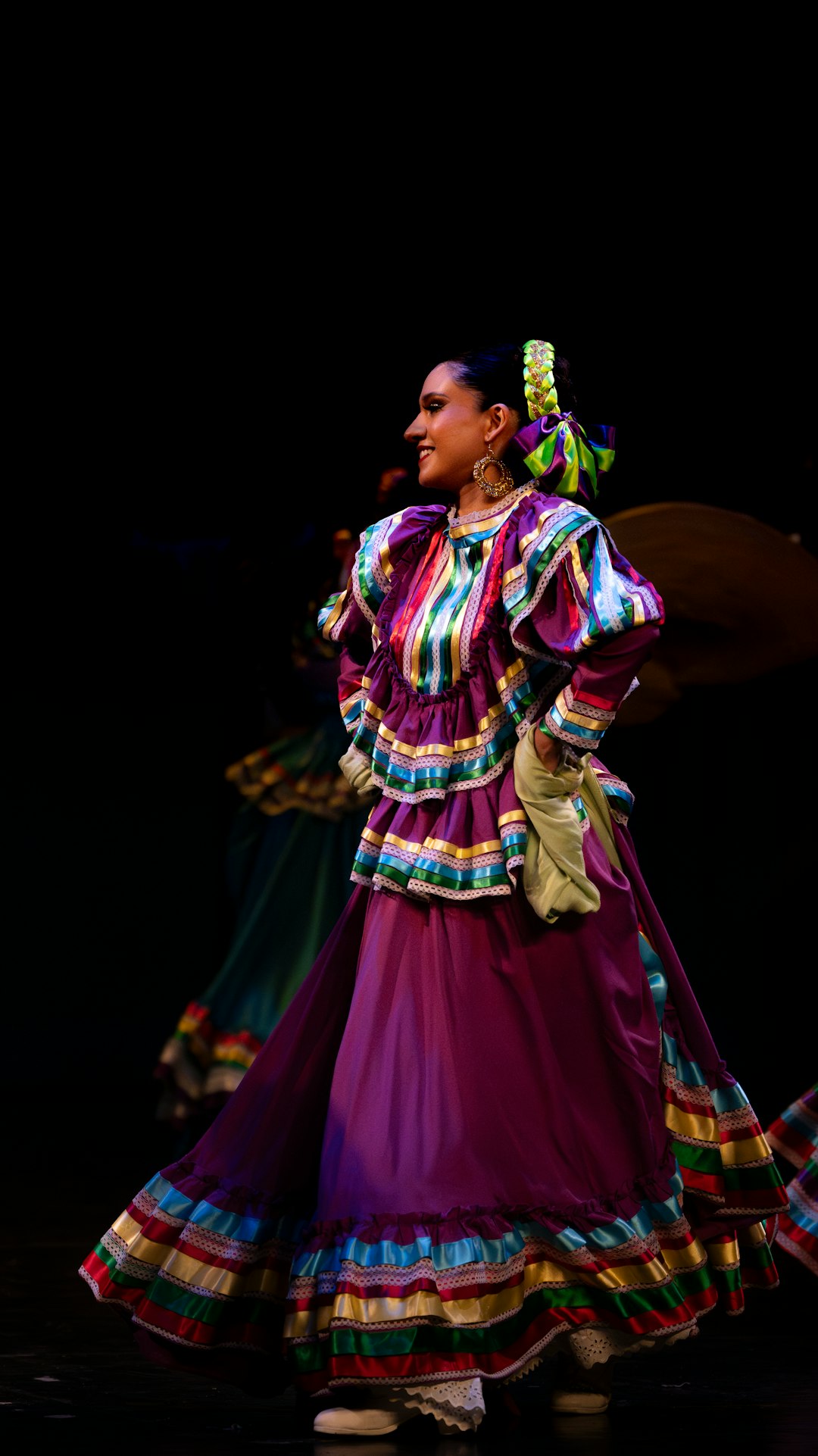
A tango dress must do contradictory things: cling and flow, reveal and conceal, honor tradition while expressing individuality. Whether you're preparing for your first milonga or your fiftieth performance, the right dress becomes part of your technique—supporting your balance, responding to your partner's lead, and moving with the music's cadence. The dress that earns compliments under stage lights may be entirely wrong for a crowded Buenos Aires milonga. Here's how to choose wisely across two distinct contexts.
1. Know Your Context: Milonga vs. Stage
Before fabric or color, determine where you'll actually dance.
Social milongas demand restraint. Close embrace dominates; your dress will press against partners. Avoid back embellishments (beading, bows, exposed zippers) that dig into chests. Hemlines should clear the floor by 1–2 centimeters—long enough for elegance, short enough to prevent tripping in crowded lines of dance. High slits work for performances but can tangle in social dancing; if you want leg visibility, opt for subtle asymmetry.
Stage performance invites drama. Floor-length skirts with strategic slits showcase boleos and extensions. Asymmetrical hemlines create visual interest under lights. You have space for volume, trains, and heavier embellishment. But remember: that stunning train becomes a liability if you compete or tour—weight adds up quickly in luggage.
2. Master the Silhouette
Tango movement is lateral and rotational. Your dress must accommodate both without distortion.
For close embrace, bias-cut designs in bi-stretch jersey follow your body without shifting. Avoid A-line skirts that balloon when you pivot; they disrupt connection and reveal more than intended. Ruched sides accommodate the compression and extension of ochos.
For open embrace and performance, fitted bodices with flared skirts create the iconic tango line. The flare should begin at or below the hip—higher flares restrict leg movement. Consider how the skirt behaves in a giros: does it flow outward or collapse? Test with actual turns, not just standing poses.
3. Select Fabric with Purpose
Fabric choice affects temperature regulation, partner comfort, and movement quality.
Bi-stretch jersey (polyester-spandex blends) dominates social dancing for good reason: it recovers shape, breathes, and won't bunch against partners. Look for 200–280 GSM weight—lighter shows every line; heavier overheats.
Silk jersey and viscose blends offer luxury for performances with acceptable movement. They photograph beautifully but require careful handling.
Avoid: Stiff taffeta (no give, loud rustling), 100% polyester without stretch (traps heat, restricts movement), and anything with coarse sequins or beading on the bodice (abrasive against partners).
4. Navigate Color with Cultural Awareness
Tango dress color carries unspoken signals.
Milonga etiquette traditionally favors darker, subtler tones—black, deep burgundy, navy, forest green. These minimize visible sweat, hide wear from repeated partner contact, and signal respect for the form. Bright reds and oranges, while "passionate" in popular imagination, can read as attention-seeking in conservative communities.
Performance permits broader expression, but consider your lighting. Deep purples and midnight blues disappear under warm stage lights; crimson and gold read powerfully. For competitions, avoid pure white unless required—judges need to see your footwork clearly against your hem.
5. Engineer the Neckline Strategically
Necklines serve functional and aesthetic purposes in tango.
V-necks and scoop necks work universally, allowing head movement without constraint. For performances, a well-constructed plunging neckline adds drama without compromising security—test that the bodice stays put through volcadas.
High necklines require caution: they restrict head tilts in close embrace and can feel claustrophobic in heated venues. If you prefer coverage, consider illusion mesh or lace insets rather than solid fabric.
Strapless and one-shoulder designs demand exceptional construction. Nothing destroys confidence like adjusting your dress mid-tanda. For social dancing, ensure at least one secure strap or sleeve.
6. Respect the Shoe Relationship
Your shoes and dress negotiate with each other. A heavy dress requires a stable heel; a light dress permits flexibility.
Heel height affects hemline perception: 8cm heels raise your effective height significantly. If you alternate between practice shoes (5cm) and performance heels, your dress length must accommodate the difference or you'll trip.
Strap security matters more than aesthetics. Ankle straps should not compete with hemline slits for visual attention. Nude or dress-matching straps elongate the leg; contrasting straps create deliberate punctuation.