Why Your Song Choice Matters More Than Your Hip Drops
I once watched two dancers perform the same choreography at a hafla back-to-back. Same costume, same moves, same venue. One had the crowd clapping along. The other had people checking their phones. The difference? Music. One picked a track that breathed with her movements. The other grabbed something generic off a playlist and hoped for the best.
Your music isn't background noise. It's your dance partner.
The Rhythms That Built This Dance
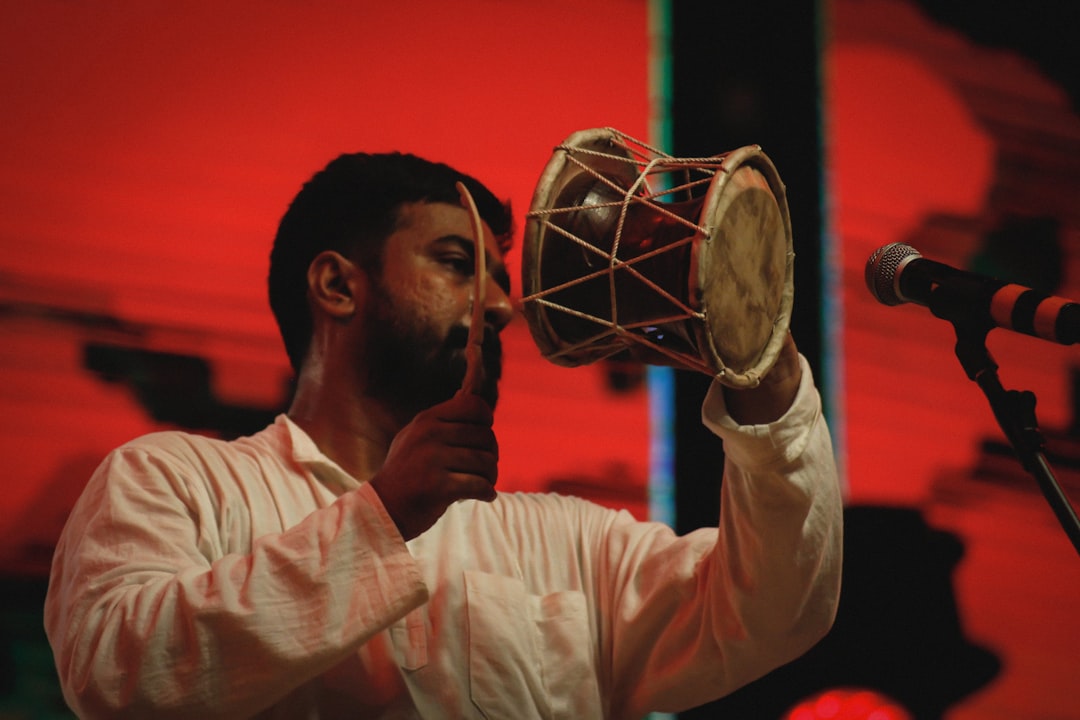
Belly dance grew up alongside specific instruments and rhythmic patterns. The darbuka's sharp doum and tek, the shimmer of the riq, the deep pulse of the bendir — these aren't decorations. They're the skeleton your body fleshes out.
When you hear a maqsum rhythm (dum tek ka tek, for those counting at home), your hips already know what to do. That's centuries of muscle memory talking. Lean into it instead of fighting it.
Genres Worth Exploring
Classic Arabic — Start Here
Oum Kalthoum didn't become a legend by accident. Her music stretches and swells in ways that demand your full attention. Fairuz brings a different energy — more restrained, more poetic. If you're serious about this dance, spend time with both. Shaabi tracks from Egypt give you something grittier, more street-level. All of it is gold for dancers.
Egyptian Pop — The Crowd Pleaser
Amr Diab's tracks practically choreograph themselves. Nancy Ajram's songs have hooks that stick in your audience's heads for days. Modern Egyptian pop layers traditional percussion over polished production, which means you get authenticity and accessibility in one package. Perfect for restaurant gigs or casual performances where you need people to feel the music immediately.
Turkish Romany — When You Want Fire
Fast. Relentless. Joyful. Turkish Romany music doesn't let you stand still. The clarinet wails, the kanun cascades, and suddenly you're doing things with your fingers you didn't know were possible. Mustafa Sandal brings modern energy; Emel Sayın carries old-world emotion. Both will push your stamina.
Tribal Fusion — Breaking the Mold
Rachel Brice didn't become iconic by sticking to tradition. Tribal fusion pulls from electronic music, world beats, even trip-hop. It's not for purists, and that's the point. If your style mixes belly dance with contemporary or Gothic elements, this is your playground. Solace and Beats Antique are solid starting points.
Building a Playlist That Actually Works
Match your tempo to your movement vocabulary. Sounds obvious, but I've seen dancers try to do a slow, undulating floor piece to a track that's racing toward the chorus. If your body wants to melt, let the music melt with it.
Think about emotional arc. A performance that stays at one energy level for five minutes puts people to sleep. Start somewhere. Build somewhere. End somewhere else. Your audience should feel like they went on a trip, not sat in a waiting room.
Listen to your chosen tracks at least ten times before you choreograph to them. You'll catch instrumental breaks, subtle shifts in dynamics, moments where the percussion drops out and the violin takes over. Those moments are choreography gifts. Don't waste them.
And honestly? Don't be afraid to pick something nobody expects. A dancer I know performs to a slowed-down Fairuz track with extended pauses, and it's haunting every single time. The "rules" are suggestions. Your taste is the real compass.
One Last Thing
Music doesn't just accompany your dance. It shapes it. A great dancer doesn't move to the music — she moves with it, like a conversation between her body and the sound. Find tracks that make you want to move before you even think about choreography. That instinct is worth more than any technique class.
Now go put on some Oum Kalthoum and let your hips do the talking.