The Playlist I Thought I Needed
I used to spend Sunday afternoons hunched over my laptop, hunting for the definitive belly dance track. You know the one. It had to hit exactly 120 beats per minute, feature a malfouf rhythm during the entrance, and build to a drum solo that would make the audience gasp. I had spreadsheets. Color-coded folders. A "DRUM SOLOS—EMERGENCY ONLY" playlist that I never actually used because none of them felt quite right.
For three years, I treated music like a math problem. If I could just solve for x—the perfect combination of tempo, instrumentation, and cultural authenticity—my dancing would finally look professional. Instead, I looked predictable. Audiences clapped politely. Other dancers complimented my "clean technique," which every dancer knows is code for "you didn't move me."
When the Music Fights Back
The turning point came at a hafla in Portland. I'd chosen a gorgeous classical Egyptian piece—technically flawless, historically appropriate, the kind of track that checks every box on a workshop syllabus. Two minutes in, the sound system started skipping. Not a dramatic stop, but a stutter, like the song was hiccupping. I kept dancing because that's what you do, but my brain split in half. Half of me tried to follow the broken rhythm. The other half panicked about what would come next.
I finished the set feeling numb. Backstage, an older dancer named Samira handed me a cup of mint tea. "You were fighting the music," she said. "Not your fault—the track was fighting you first. But you didn't breathe once. Music breathes. You have to let it."
She was right. I'd been so focused on executing choreography to a fixed soundtrack that I'd forgotten music is alive. It swells, pauses, surprises. Or at least, it should.
The Tracks That Actually Work
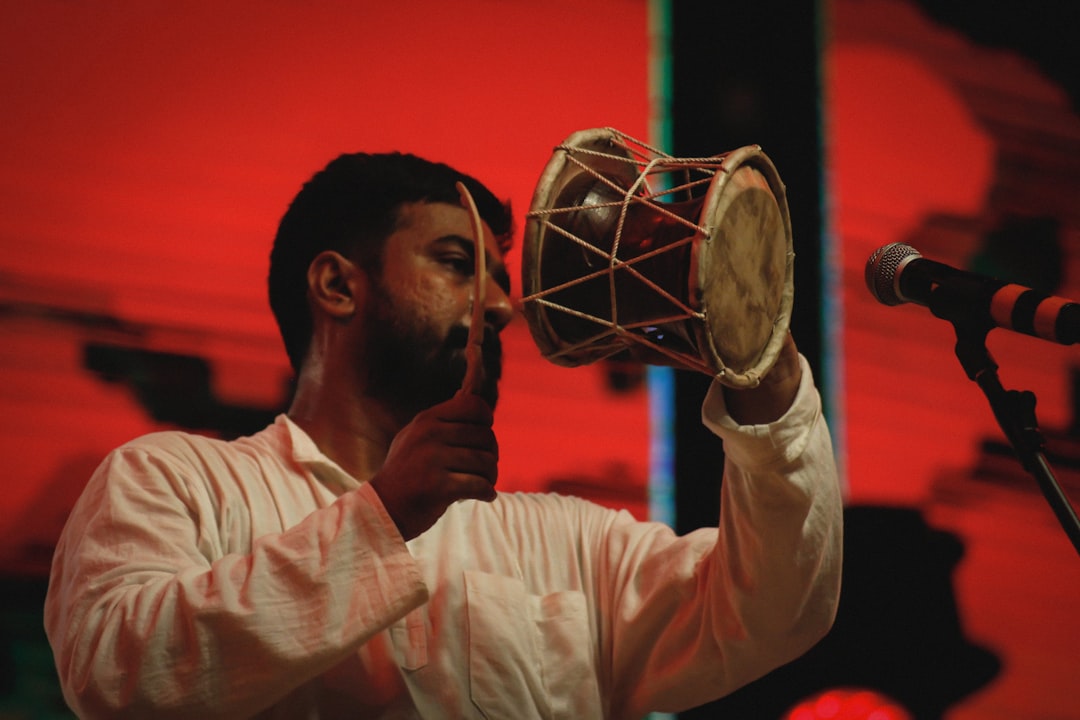
Here's what nobody told me when I started: the best belly dance music isn't always the most complex. Some of my favorite performances now happen to simple, repetitive dumbek rhythms that loop for eight minutes. Why? Because repetition gives you room to improvise. You stop counting and start listening.
I saw this clearly watching my teacher rehearse. She'd chosen a vintage Nancy Ajram track—not obscure, not particularly "deep," but undeniably joyful. During the chorus, she threw in a completely unexpected hip drop that landed exactly on a tambourine hit most people miss. The move wasn't in her choreography. She just heard something the rest of us didn't, and her body answered. That's the moment I realized music isn't a backdrop. It's a conversation partner.
Does this mean you should ditch traditional Middle Eastern music? Absolutely not. But maybe stop treating it like a museum piece. That Saidi rhythm doesn't care about your respectfulness if your respectfulness makes you stiff.
Building Something That Flows
These days, when I build a set, I think about temperature, not technique. I start cold—something slow and mysterious, maybe a taxim section that lets me establish presence without proving anything. Then I build heat: a chiftetelli that pulls the audience into my hips, literally draws them forward in their chairs. Peak temperature is usually a drum solo, but not the pyrotechnic kind. I look for drums that have space between the beats, where I can choose to follow the rhythm or slide against it.
The biggest mistake I see at student showcases? Dancers stack their fastest, most impressive moves at the beginning because the song starts energetic. By minute three, they've got nowhere to go. The audience is exhausted. Start small. Let them lean in.
Transitions matter more than the tracks themselves. I once saw a dancer switch from a mellow Arabic pop song to heavy electronic mezdeke with no bridge. It was like watching someone change channels during a movie climax. Now I overlap my tracks or find remixes that carry a motif from one song to the next. Your soundtrack should feel like one long exhale, not a playlist on shuffle.
The Night Everything Changed
Six months after the skipping-speaker disaster, I performed with a live band for the first time. Three musicians—oud, dumbek, and accordion. No set list. They asked me what maqam I preferred, and I nearly blacked out from anxiety. I picked Nahawand because it was the only one I could pronounce confidently.
The oud player started a slow taqsim. I had no choreography. I had no counts. I just listened for the pulse, that underlying heartbeat that exists even in free rhythm. When the dumbek joined, it hit harder than any studio-mastered track through speakers. I could feel it in my sternum. The accordion player made eye contact and suddenly sped up—just a little test, I think, to see if I'd follow. I did. The audience started cheering mid-song, not at the end, because they could see us figuring it out together in real time.
Afterward, my hair was a mess. I'd missed a turn. My zills were half-a-beat off for at least thirty seconds. It was technically my worst performance and emotionally my best. That's when I understood: the right soundtrack isn't the one that makes you look good. It's the one that makes you brave enough to look human.
Your Music Is Already There
Stop hoarding tracks. Stop waiting for the song that will finally unlock your potential. The dancers who stay with you long after a show aren't the ones with the rarest vinyl or the most authentic folklore selection. They're the ones who heard something in the music that you didn't, and had the guts to show you what it looked like.
Put on something that scares you a little. Close your eyes. Move before you think. That's where your real soundtrack lives.