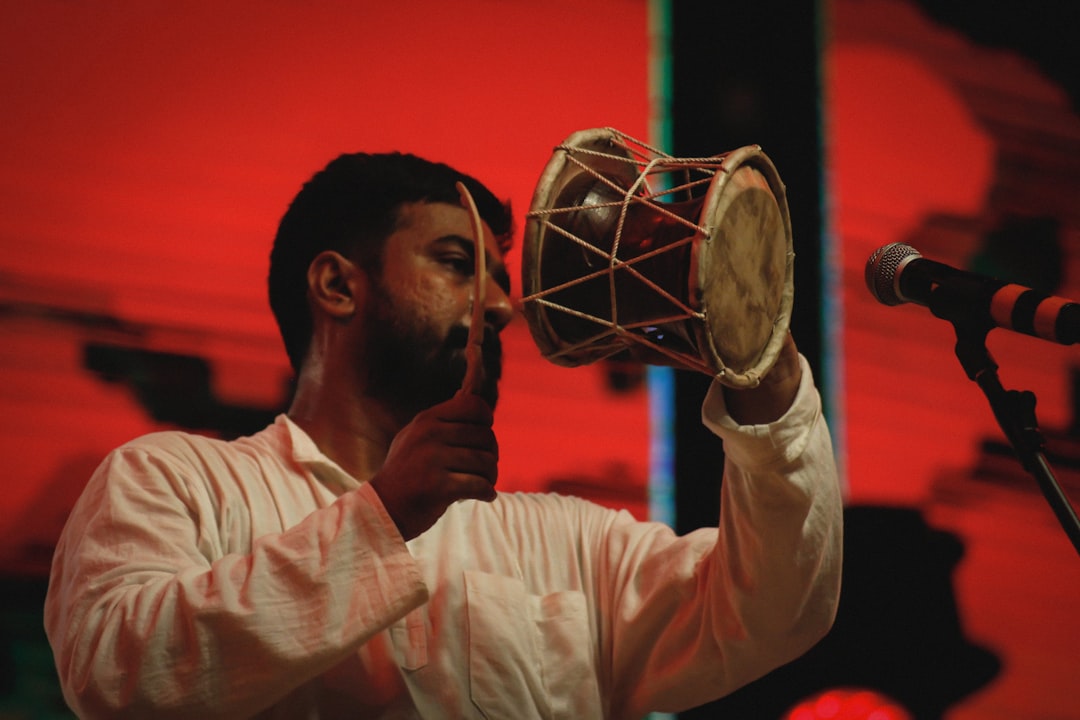
I still remember the first time I danced to live tabla. My teacher had dragged our entire class to a hole-in-the-wall restaurant in the city where a Syrian drummer played every Thursday. I was sixteen, convinced I knew everything about belly dance because I'd mastered a beginner's choreography to a synth-heavy CD my mom bought at a festival. Then that drummer started playing, and my body didn't recognize a single phrase. The music breathed. It sped up when I expected slow, dropped into silence when I wanted a crash. I stumbled through the whole set, grinning like an idiot, and realized I'd been dancing to metronomes, not music.
That's the thing nobody tells you when you start belly dance. The music isn't background noise—it's the other half of the conversation. Pick the wrong track, and you're essentially talking over someone instead of with them.
Finding Your Rhythm (Without Drowning in Jargon)
Walk into any belly dance forum, and you'll find people arguing about maqsoum versus saidi versus malfuf like they're sorting holy texts. It can feel overwhelming. But here's the shortcut nobody shares: your body already knows more than your brain does.
Put on a classic baladi progression—something like Hossam Ramzy's "Enta Omri"—and notice what happens to your shoulders. The accordion stretches out. The tabla answers back. You don't need a music theory degree to feel where a hip drop lands or when a chest lift should float instead of snap. Traditional Middle Eastern music was literally built for this dance. The oud cries, the nay flute circles around a melody like a bird, and the rhythms tell stories of weddings, harvests, and late-night cafés.
I spent my first two years dancing exclusively to pop remixes because I thought traditional music was "too slow" and "boring." I was wrong. I was just scared of sounding like a tourist in a culture I didn't understand yet. The moment I stopped worrying about perfection and started listening—really listening—to the tension between the qanun and the violin, my dancing changed. The sharp parts got sharper because I wasn't forcing them. The soft parts finally had somewhere to go.
When Tradition Meets Your Spotify Wrapped
Let's be real. You're probably not performing at a Cairo nightclub next month. Maybe you're dancing at a friend's wedding, a studio showcase, or your living room at 11 PM because you had a terrible day and need to move. Modern fusion exists for a reason, and it's not a dirty word.
Some of the best performances I've seen mixed electronic sub-bass with darbuka samples, or threw a sampled Arabic vocal over a trip-hop beat. Cheb Mami's "Egyptian Rai" still makes me move differently than anything purely traditional—there's an urgency to it, a street-energy that demands sharper isolations and less lyrical flow. George Abdo's early work bridges that gap perfectly; you get live instruments with a bounce that feels almost Latin.
The trick is intention. A glitchy, bass-heavy track works beautifully for a tribal fusion piece with lots of locks and torso waves. That same track will eat a classical Egyptian choreography alive. Ask yourself what story you're telling, then let the music carry half the weight.
The Playlist Problem Nobody Talks About
Most dancers build their music libraries backwards. They collect "pretty songs" first, then figure out what to do with them. That's like buying a wedding dress before you meet your partner. You end up with a hard drive full of gorgeous tracks you can't actually dance to because the phrasing is too unpredictable, the tempo never settles, or the emotional arc doesn't give you anywhere to build toward.
Here's what I wish someone had told me to look for:
Dynamic range. A song that stays at the same intensity for five minutes will flatten your performance. You want tracks that breathe—quiet moments that let you draw the audience in, then explosive sections where you can let loose.
Clear entrances and exits. When you're performing, the worst feeling is realizing your song fades in for thirty seconds while you're standing under hot stage lights smiling at strangers. Look for music with clean beginnings and decisive endings.
Personal earthquake factor. There's a Hossam Ramzy track that makes my sternum vibrate every single time. I don't perform to it often because it's sacred to me, but I practice to it constantly. That emotional connection shows up in your hips whether you want it to or not.
Three Tracks That Actually Changed How I Move
I promised specificity, so here are three pieces that aren't just "good belly dance music"—they're teachers in disguise.
"Masmoudi" by George Abdo demands you relax. The maqsoum rhythm is so conversational, so back-and-forth, that fighting it makes you look frantic. I used to over-dance this song until a teacher stopped me mid-class and said, "You're doing too much. Let the tabla talk." She was right. Now it's my reset track when I've been drilling technique too hard and forgotten how to just be in the music.
"Lamma Bada Yatathanna" (literally any classical rendition, but start with Sabah Fakhri if you're lost) will teach you about tarab—that ecstatic, heart-breaking musical tension that makes audiences hold their breath. The melody spirals upward, pauses, promises resolution, then withholds it. Dancing to this is an exercise in patience. You can't rush tarab. You have to earn it.
"Nour El Ein" by Amr Diab is my guilty pleasure pop track. It's cheesy. It's everywhere. And it makes me smile so hard my cheeks hurt, which means my dancing loosens up and stops trying to impress anyone. Sometimes you need a song that reminds you this is supposed to be fun.
The Only Rule That Matters
A few months ago, I watched a beginner dancer perform to a Spotify "Middle Eastern Lounge" playlist at a hafla. The track was generic, overproduced, and clearly chosen because it had oud samples in it. She danced anyway like it was the most precious music on earth. She listened to the fake strings. She hit the electronic tabla beats that a real drummer would have never played. She made it work because she wasn't waiting for permission from the music—she was in genuine relationship with it.
That's the secret. The best music for your belly dance journey isn't the one with the most authentic instruments or the perfect 4/4 maqsoum structure. It's the song that makes you forget you're practicing. The one that catches you off-guard in your kitchen, hips already circling before your brain catches up.
Start there. Build outward. The rest is just decoration.