---
The Plateau Nobody Warns You About
You know the choreography. Yourisolation is clean. You can layer a hip drop into an undulation without thinking about it.
So why does it feel like something's missing?
I hit this wall three years into serious belly dance study. I could execute every advanced move my teacher threw at me, but my performances felt... mechanical. Correct, but cold. Like watching someone solve a math problem instead of feeling a story.
That's when an older dancer at a haflit pulled me aside and said something I've never forgotten: "You dance like you're proving something. When are you going to stop proving and start speaking?"
It stung because she was right.
---
The Taxim Question
Here's the test nobody puts in writing: watch your Taxim (finger cymbal) playing.
Are you counting the strokes mentally while you play them? Or are you listening to where the melody wants to go and meeting it there?
Advanced dancers don't play more notes. They play the right notes at the right moment. A single clean cymbal strike that lands on the exact beat the oud player emphasizes hits harder than a flurry of technically correct but emotionally flat taps.
The difference is whether you're performing to music or you're performing with it.
---
Baladi Isn't a Style—It's a Conversation
When dancers say they "do Baladi," most mean they've learned the choreography.
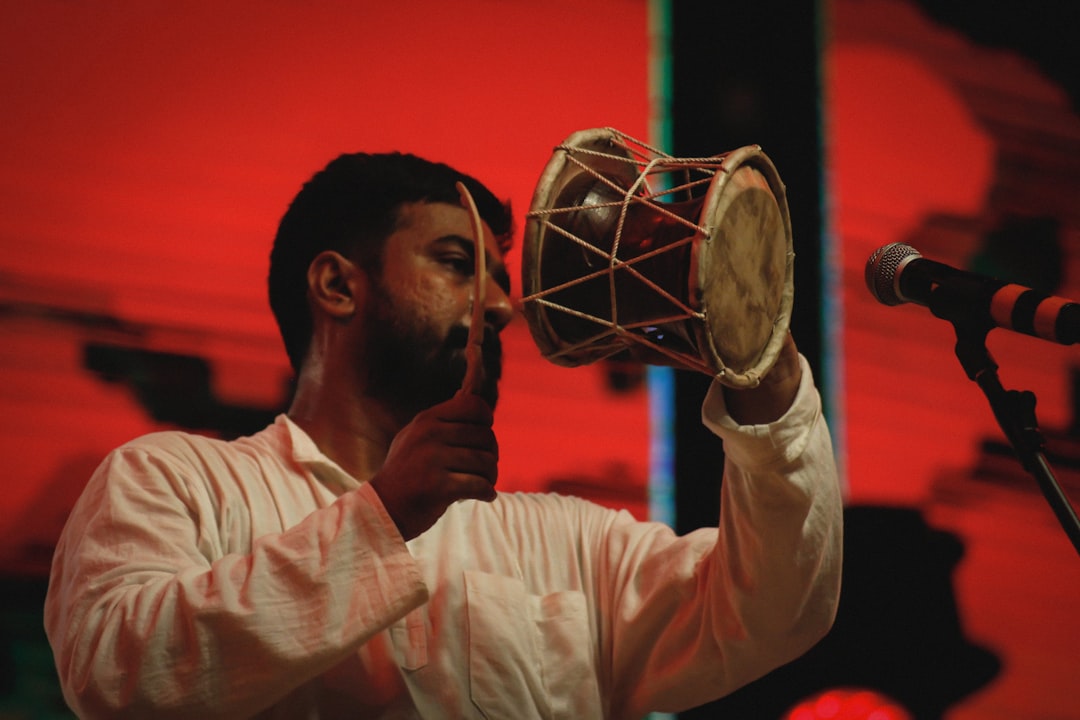
Real Baladi is a dialogue. It's listening to the sax, the darbuka, the singer's breath before the next phrase—and answering. The taxi driver in the song. The tea cooling on the table. The feeling of coming home after too long away.
Try this: put on a Baladi track and don't move for the first full listen. Just breathe with it. Find the moments where the music pulls or pushes. Then move—not from muscle memory, but from that internal pull.
The movement quality shifts immediately. Suddenly you're not dancing to a 4/4 pattern. You're dancing with a specific man missing his mother, or a specific woman remembering a night that changed everything.
---
The Khaleegy Secret Nobody Teaches
Khaleegy comes from the Arabian Gulf—those flowing, wave-like movements that look so effortless they seem accidental.
They're not.
The secret is in your glutes and hip flexors, not your abdominals. Every time you shift your weight, your glute fires to initiate the sway. Your hip flexors control the depth and release. Your core is along for the ride, not driving the car.
I spent six months doing glute activation exercises before my Khaleegy stopped looking like a fish flopping on shore and started looking like a dhow cutting through Gulf water.
Pilates saved me here. Specifically: side-lying leg lifts, clamshells with resistance bands, and controlled marches holding tension in the glute before each lift. Boring, unglamorous work. But it gave my movement a groundedness I couldn't fake with technique alone.
---
Where Your Arms Actually Come From
Arm patterns separate intermediate from advanced dancers—not by complexity, but by authenticity.
When your hands travel from extension to frame, does the movement come from genuine intention? Or is it filling "choreography time"?
Think of your arms as having a relationship with your core. Every arm extension is your body's way of physically reaching toward something—inviting, releasing, questioning, answering. Your ribs twist. Your shoulder blade shifts. Your spine responds.
The best belly dancers' arms always feel like they mean something, even when the audience can't articulate what.
---
The Uncomfortable Mirror Test
Perform in front of a mirror—then don't look at your technique.
Watch your face.
Your jaw is clenched. Your eyes are darting. You're in problem-solving mode, not feeling mode. Your audience is reading that face, not your clean hip drops.
Then perform for your mirror again, but this time—before you start—say out loud: "I am about to tell a story."
Your physiology changes immediately. Your eyes find a focal point. Your expression softens into something specific. You're no longer checking boxes.
This sounds ridiculous. It works anyway.
---
What "Advanced" Actually Means
I used to think advanced meant doing more—more layers, more complexity, more technical precision.
What I've learned instead: advanced means doing less, but with more depth.
One clean movement, landed on exactly the right beat, carrying exactly the right feeling, hits harder than a twelve-layer combination executed at technical perfection but emotional zero.
The dancers whose performances I remember—Amelie T. in her Cairo days, the Moroccan-born teacher who ran the studio near my first apartment, Nadia at that workshop in Austin—they all had one thing in common.
They stopped performing.
They started speaking.
---
Your Next Practice Session
Before you go to your next practice session, try this:
Pick one move you know inside-out. Forget it's supposed to be advanced. Forget the choreography. Play your favorite track—the one that makes you feel something specific—and just move with that one move, following your body and the music.
Notice what happens in your chest. In your breath. In your face.
Notice when you stop dancing like you're proving something.
That's where your advanced work actually begins.