---
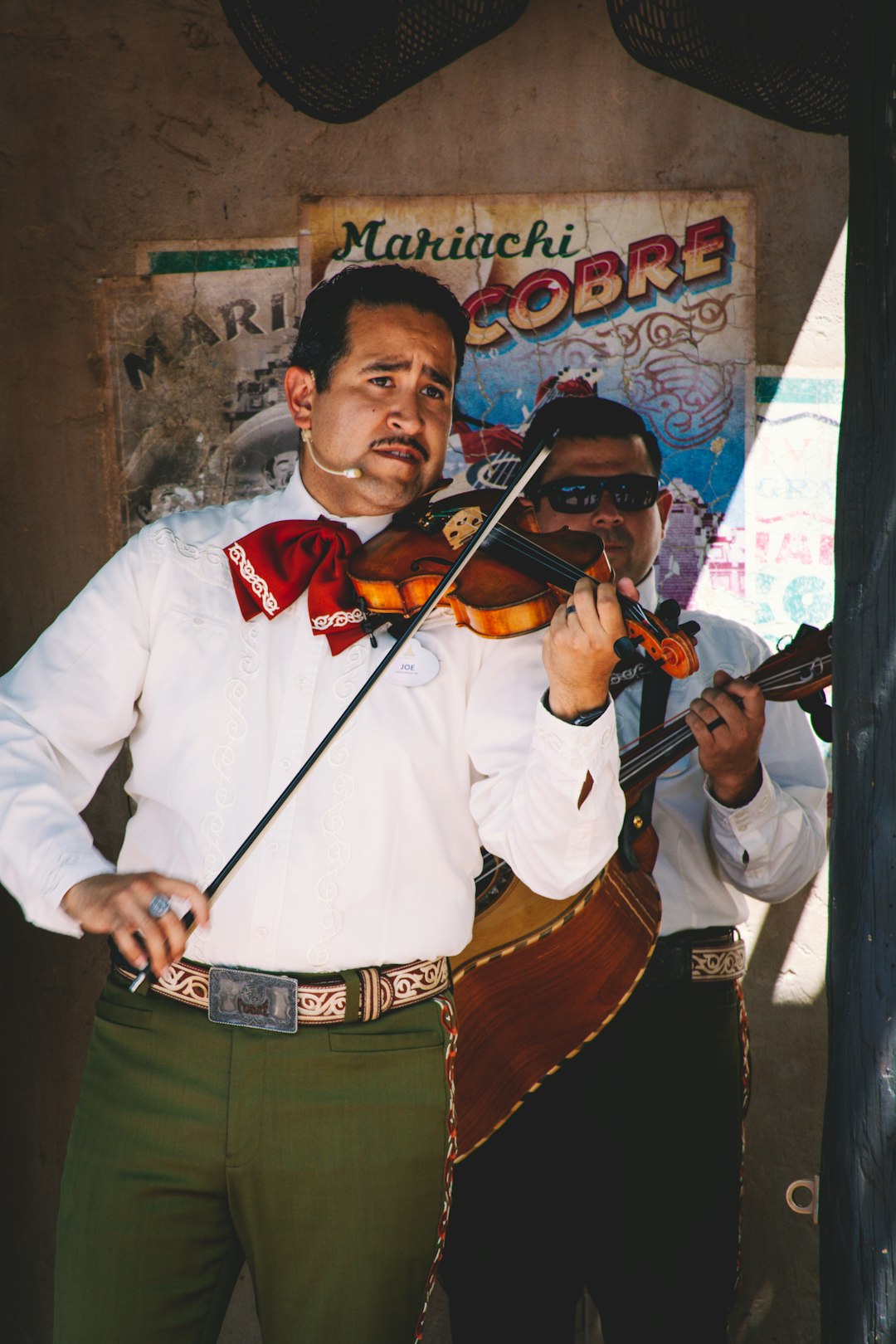
There's a moment every folk dancer knows. You're backstage, or in a dim corner of the community hall, and your hands are doing that thing — adjusting a waistband, smoothing a sleeve, tugging at a collar that never quite sits right. The music is about to start. Your heartbeat finds the rhythm before your feet do. And in that breath between stillness and movement, your costume isn't just fabric anymore. It's identity. It's memory. It's the weight of generations wearing the same shape, the same colors, the same careful stitchwork, and trusting you to carry it forward.
That's the feeling I'm chasing in this piece. Not a buying guide. Not a checklist. Just the honest truth about what it means to dress for a tradition that doesn't belong to you by birth, but that you've earned through practice, through study, through showing up.
The Question Nobody Asks Out Loud
Here's what most articles on this topic skip: folk dance costumes are political. They're acts of translation. When you — an outsider to a given tradition — put on clothing rooted in another community's history, you're making a statement whether you intend to or not. The question isn't just "what looks good" or "what's comfortable." The real question is: "Am I allowed to wear this, and if I am, am I doing it justice?"
Take Irish stepdance. The hard shoes, the soft shoes, the sequined dresses with their trademark bodices — these aren't costumes in the theatrical sense. They're markers of a living diaspora, a tradition that survived famine, emigration, and cultural suppression. When someone not of Irish heritage performs stepdance, the community's relationship to that choice is complicated and real. Same with Flamenco. Same with the bhangra suits of Punjabi dance. Same with Japanese nogaku costumes or West African dance wrappers.
This isn't meant to discourage you. It's meant to get you thinking before you buy.
Start With the Dance, Not the Dress
I learned this the hard way. Years ago, I was invited to perform at a Balkan music festival, and I was so focused on finding the right potur — the wide pleated skirt worn in many Slavic traditions — that I didn't spend enough time thinking about what I actually needed my body to do. Balkan dance, particularly the oro circle dances of Serbia and Macedonia, involve a specific kind of grounded, percussive footwork. The steps are small but powerful. You need a costume that can handle sharp heel strikes, sudden direction changes, and hours of continuous movement without riding up, falling down, or turning into a sweat-soaked prison.
I ended up replacing my first skirt three days before the event. The second one — a secondhand potur from a retired dancer in Skopje, passed along through a friend of a friend — was heavier, stiffer, and worn soft in all the right places. It moved with me instead of against me. That was the lesson: find the dance first. Understand its physical demands. Then dress accordingly.
The Fabric Truth
If I could make one point above all others, it's this: folk dance costumes are made for movement, not for stillness. This sounds obvious, but it contradicts how most costumes are marketed and sold. Online shops will show you gorgeous photos of elaborately beaded vests, hand-embroidered chemises, and jeweled headpieces — all photographed on models standing in graceful poses. You never see the sweat stains. You never see the inside of the waistband after three hours of dancing horo in August.
Fabric choice matters more than most people realize. Natural fibers — cotton, linen, wool, silk — breathe and move with the body. Synthetic blends trap heat, don't drape properly, and can cause chafing during sustained movement. I once wore a polyester-blend skirt to a Greek dance event and spent the entire hasapiko section thinking about nothing but my inner thighs. That's not the kind of embodied connection you're going for.
For footwear, the stakes are even higher. Your feet are your instrument. A poorly fitting shoe doesn't just feel uncomfortable — it changes your weight distribution, your balance, your ability to articulate the steps. In traditions like Greek zeibekiko, where dancers use their boot heels to mark intricate rhythms on the floor, footwear choice is practically a spiritual decision.
Where Authenticity Actually Lives
Here's where the advice gets uncomfortable for some readers: authenticity isn't found in a shopping cart. If you're serious about folk dance — if you're not just attending a one-time workshop but planning to study and perform over months or years — then the most authentic thing you can do is build relationships with the communities that hold these traditions.
I don't mean you need to be formally adopted into a cultural lineage (though in some traditions, that kind of deep relationship is exactly what's expected). I mean something simpler and more practical: talk to the dancers who've been doing this longer than you. Ask where they got their costumes. Ask who made them. Ask whether they can introduce you to a tailor or costume maker who understands the specific demands of the tradition.
A handmade costume from a local artisan in Guatemala will teach you more about marimba dance than any online purchase. A vintage ao dai from a Vietnamese grandmother's closet carries a weight that no replica can replicate. These paths take longer, and they require humility. You might get turned away. You might be told your money isn't welcome. Respect that. The tradition existed before you, and it will exist after you. Your job is to be a worthy vessel, not a collector.
Making It Yours Without Breaking It
That said, folk dance has always evolved. Traditions that look ancient to us were once contemporary, contested, and alive with the same tensions we feel today. The elaborate costuming of Mexican folklórico was partially shaped by mid-20th-century nationalistic arts policies. Irish stepdance costumes changed dramatically in response to competition culture and touring demands. Even the simplest village horo skirt has been reinterpreted countless times across countless regions.
Room for personal expression exists — but it should come from understanding, not from assumption. Adding a brooch that carries personal meaning to a traditional blouse is a beautiful practice, as long as the brooch doesn't alter the garment's silhouette or cultural significance. Choosing a color palette that flatters your skin tone while staying within the tradition's accepted range is reasonable. Wearing a simplified version of a full ceremonial costume at a casual gathering is often appropriate.
Where it breaks down is when personal taste overrides cultural meaning — when you take a sacred ceremonial garment and turn it into a fashion statement, or when you mix elements from incompatible traditions in ways that feel careless rather than creative.
The Occasion Shapes Everything
A competition stage, a festival grounds, a living room full of friends — these call for different relationships with your costume. I've performed in full regalia at outdoor Balkan festivals where the heat was brutal and the dust was relentless, and I've performed in simple practice clothes at intimate indoor events where every detail was visible and every movement mattered.
Know what you're walking into. If you're performing at a formal showcase, invest the time and money in a proper costume. If you're attending a casual jam, dress in a way that shows respect for the tradition while acknowledging that you're there to learn, not to impress. The dancers who've been doing this longest can always tell the difference, and they notice when someone's dressed beyond their skill level — it's a kind of social dissonance that can undermine trust.
The Last Thing Before You Step Onto the Floor
Back to that moment I described at the start. The one where you're adjusting your costume and the music is about to begin. Here's what I've come to believe after years of dancing in borrowed clothes, handmade pieces, thrift-store finds, and one gloriously inappropriate sequined disaster I bought in a moment of enthusiasm in Bratislava:
The costume matters less than you think, and more than you want to admit. It matters less because the dance itself — the rhythm, the community, the tradition's living pulse — will carry you if you let it. And it matters more because the act of dressing with care, with research, with humility and attention, is itself a form of respect that the tradition recognizes and rewards.
When you step onto the floor in something that fits right, that moves with you, that was chosen with the dance in mind rather than just your own appearance — something shifts. You stop performing at the tradition and start being inside it.
That's the feeling worth chasing.