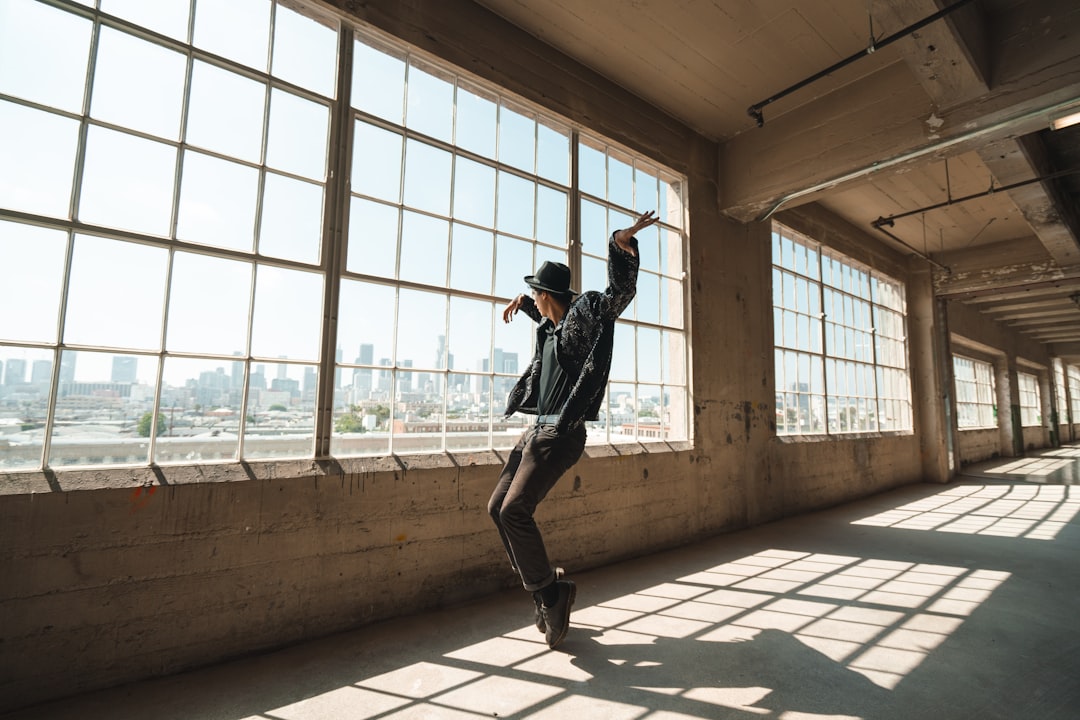
Watch a pair of dancers execute a flawless, rapid spin or a dramatic, suspended dip. The beauty seems effortless, a pure expression of art. But beneath the grace and glamour lies a sophisticated application of science. Ballroom dance is a living laboratory of biomechanics and physics, where the human body becomes an instrument of precise force, balance, and energy. Let's explore the fundamental principles that transform physical effort into breathtaking movement.
The Dancer's Engine: Biomechanics in Action
Biomechanics examines how muscles, bones, and joints work together to create motion. For ballroom dancers, this isn't just about strength—it's about the intelligent, synergistic application of it.
Muscular Synergy and Power Every movement originates from a coordinated chain of muscles. Powerful leg muscles—the quadriceps and glutes—provide the propulsion for the sweeping strides of a Waltz or the explosive kicks of a Quickstep. This power is channeled upward through a engaged core, particularly the transverse abdominis and obliques, which act as the body's central stabilizer. This "core engagement" is non-negotiable for maintaining posture during a fast Viennese Waltz turn or achieving a sharp, staccato action in Tango. Meanwhile, muscles of the back, like the latissimus dorsi, create the strong, poised "frame" that allows partners to communicate through touch.
Dynamic Balance and Stability Balance in ballroom is rarely static. It's a constant, subtle negotiation. Dancers develop an acute sense of their center of mass (roughly located in the lower abdomen) and learn to control its placement. In a spin, they lower their center for initial stability, then align it precisely over the supporting foot to increase rotational speed. In partnership, balance becomes a shared endeavor. During a promenade in Waltz or Foxtrot, dancers lean away from their shared axis, creating a mutual counter-tension that forms a stable, moving arch.
Proprioception and Body Awareness This is the dancer's internal GPS. Proprioception, or kinesthetic awareness, is the subconscious sense of where your body parts are in space and in relation to each other. A skilled dancer has a detailed "body map," allowing them to isolate a hip movement in Rumba while keeping their shoulders level, or to extend a limb with precise control without looking at it. This refined awareness is what makes intricate footwork and seamless partner matching possible.
The Dance of Forces: Physics of Partnership
The magic of ballroom truly ignites when two bodies move as one. This connection is governed by classic principles of physics.
Generating and Managing Momentum Momentum is the lifeblood of flow across the dance floor. Dancers use force to generate it and technique to control it. A lead initiates a turn by applying a gentle rotational force (torque) through the frame. The follower, maintaining a connected tension, accelerates into the spin, conserving that angular momentum. In swing dances like Jive or Lindy Hop, the "whip" is a textbook example. The couple creates potential energy on a rock step, which is converted into kinetic energy as the follower is sent into a thrilling, high-speed rotation.
The Closed System of Energy Transfer A partnership functions as a closed energetic system. Energy is not lost; it is transferred back and forth through the points of connection—primarily the hands and torso. In a smooth swing in Waltz, the leader's body leads the movement, transferring energy into the follower's core, which then manifests as a pendulum-like motion. This continuous loop is what creates the appearance of effortless, fluid motion. Breaking this connection dissipates the energy and halts the flow.
Manipulating the Shared Center of Gravity Advanced partnering involves consciously managing a shared center of gravity. In a daring dip, the supporting dancer actively lowers and shifts their own center backward to counterbalance their partner's weight, creating a secure, dramatic line. In Latin dances, this concept appears in counter-balances, where partners use equal and opposite tension to achieve striking, off-axis shapes that would be impossible for a solo dancer to hold.
Conclusion: Where Art Meets Science
Understanding the science behind the spin, the physics of the frame, and the biomechanics of balance does not diminish the artistry of ballroom dance. Instead, it reveals the profound intelligence of the human body in motion. It demystifies technique, transforming an abstract "feeling" into a tangible, understandable set of principles. For dancers, this knowledge is empowering—a roadmap to refine movement from the inside out, ensuring that every beautiful, intricate step is as efficient and powerful as it is expressive.
How to Use This Science: In your next practice, move beyond just mimicking steps. Focus on one principle. Drive your movement intentionally from your center of mass. Feel how power initiates from your core and travels through your limbs. Notice how a stable core makes your arms lighter for your partner. By applying the science, you elevate your art.










