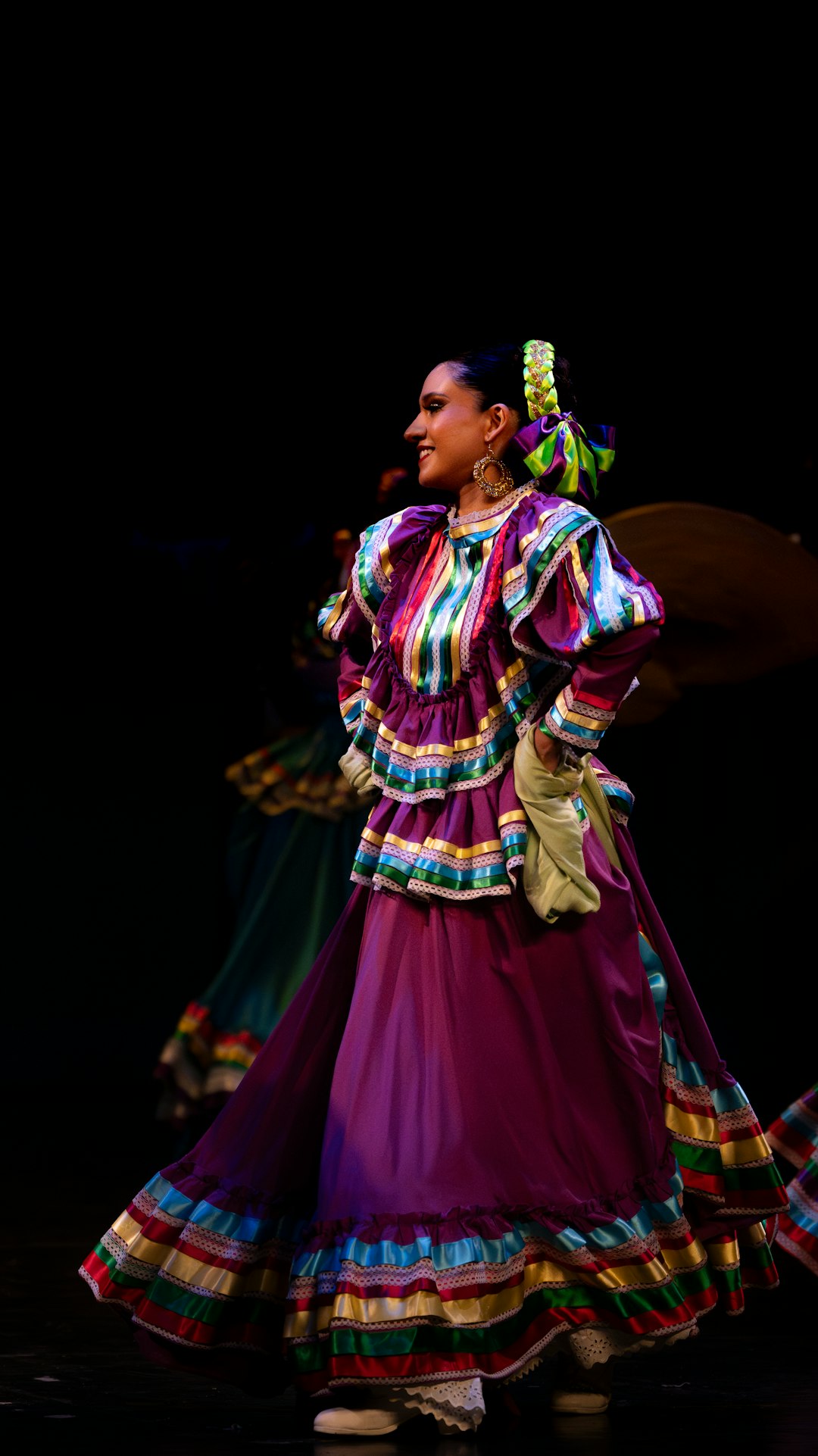
There's a moment right before the orchestra strikes up—the kind of stillness that feels charged. You've found your spot on the floor, your weight settled, and you catch your reflection in the darkened mirrors along the edge of the room. The skirt you chose tonight moves the way you need it to. The heels feel like an extension of your calf. For a second, you're not thinking about footwork at all. You're just ready.
That moment doesn't happen by accident. It comes from treating your tango wardrobe as part of your practice, not an afterthought.
The problem with most tango dress advice is that it starts with aesthetics—think elegant, timeless, sophisticated. But tango clothes work backward. They start with movement and end up looking beautiful because they were designed to move with you, not against you.
Fabric is the first conversation you have with the floor.
Silk and satin have a reputation in tango for good reason: they don't fight the physics of a sharp salida or a boleo. When Milena Smit, in that striking 2019 performance at Teatro Colón, wore a bias-cut crimson dress through a twelve-minute tanda, the dress didn't just look right—it behaved right. It arrived where she needed it to land and stayed there. Chiffon layers do something similar for a different reason: they catch air on fast turns and come to rest without pulling at your hip. The difference between a dress that works and one that fights you mid-tango is usually about how the weight distributes when you're in motion.
A-line skirts tend to be the reliable choice for this reason—they've got enough fabric to make a statement on a giro but sit close enough to the waist that they don't become a distraction on a close embrace. If you're working with something fuller, test it in a práctica first. Sit down in it. Cross your legs. Lean into someone at close hold. If you're adjusting fabric instead of thinking about your partner, that's your answer.
For men, the conversation shifts to structure. A well-tailored jacket doesn't just look sharp—it keeps your frame stable in open breaks and allows you to lead from the chest without pulling or binding. The traditional advice is dark, minimal, and fitted, and it holds up not because it's conservative but because it works. A tight-weave wool or a cotton-linen blend breathes better than synthetic alternatives over a long evening, which matters more than most beginners expect. Two hours into a milonga, synthetic fabric becomes a small, persistent annoyance you can't stop thinking about.
Tango shoes are worth discussing separately because they're load-bearing in the most literal sense. For women, the heel height that looks the most striking is rarely the one that serves the dance best—if you're still building ankle stability, a three-inch block heel gives you something to trust. As your technique deepens, you can experiment with stiletto styles and Argentine-designed styles with split soles that let the foot flex more naturally. The shoe should feel like a tool, not a costume piece.
Men's tango shoes follow a similar logic: split soles allow the arch to articulate through peso changes more clearly than a full sole does, which is why dancers who care about precision tend to prefer them. Suede sole against a wooden floor is a specific sensation—grip at the heel, glide at the toe. Once you've danced in it, you understand why people are particular about it.
Accessories in tango carry a strange double life. On one hand, the tradition leans toward restraint—a silk shawl draped over bare shoulders, a narrow gold chain catching light at the neck, a tie knotted cleanly. On the other hand, there's something about a piece of jewelry that suddenly becomes visible during a volcada or a gancho—something that wasn't visible from across the room but your partner sees from three inches away. That intimacy is part of what tango accessories are really for.
Which means the question isn't really "what should I wear?" It's "what do I want to feel when the music starts?"
If you're chasing confidence, the answer is fit above all else. A perfectly fitted skirt that cost less than a designer label will out-perform a beautiful dress that gaps at the waist or bunches when you sit. Tailoring—even simple adjustments like taking in a side seam or shortening a hem—transforms how you carry yourself. When the fabric is exactly where it should be, your body stops compensating and starts dancing. That's not a small thing.
And if you're wondering whether you should invest in a custom piece: yes, probably. Not for every occasion, but for the moments that matter—the first time you dance at a recognized festival, the performance you've been preparing for, the tanda at a milonga you keep coming back to. There's something that happens when you put on clothes that were made for your specific measurements. The word "custom" sounds indulgent, but in practice it just means not having to think about your clothes while you think about the dance.
Care and maintenance are unglamorous but essential. Silk blouses and satin skirts generally want hand washing and line drying—no spin cycle, no dryer, no exceptions. Store them flat or on padded hangers so the fabric doesn't stress at the shoulder seam over time. Check your tango shoes after every few wears—suede soles wear down at the toe faster than most people expect, and replacing them before they go smooth is a lot less expensive than slipping during a cruzada.
The truth about tango dress is that it doesn't have to be expensive to be right. It has to be honest. Honest about the kind of dancer you are, the floor you dance on, the movements that define your style. A dancer who knows what they need from their clothes will always look more convincing than someone wearing something beautiful that doesn't belong to them.
Find what belongs to you. Then go dance.