The right tango attire disappears. You stop thinking about waistbands riding up, sleeves binding, or whether your partner's hand will catch your draped fabric. The wrong attire? It announces itself at the first ocho—distracting your partner, restricting your movement, and pulling focus from the connection that makes tango transcendent.
Whether you're stepping into your first milonga or refining your social dance wardrobe, these five mistakes separate dancers who move freely from those who fight their clothes all night.
Mistake 1: Sacrificing Mobility for Style
Tango demands articulation through the hips, extension through the legs, and rotation through the torso. That fitted dress or slim-cut jacket might photograph beautifully, but if it restricts your hip mobility or prevents a full stride in the caminata, you've prioritized appearance over function.
What to look for instead:
- Four-way stretch fabrics with at least 5% elastane—enough recovery to maintain shape, enough give for deep lunges
- Gusseted construction under arms and at crotch seams, eliminating pull points
- Biomechanical cut that follows your body's lines in motion, not just standing still
For followers, test any garment with a full back ocho and low boleo. For leaders, verify you can execute a complete pivot without shoulder restriction.
Mistake 2: Excess Fabric That Fights Your Partner
Flowing sleeves, wide-leg pants, and draped skirts create romantic silhouettes—until they wrap around your partner's arm, tangle in their belt, or obscure the precise connection points that make tango communication possible.
The embrace requires clean lines between bodies. Excess material introduces noise into that signal.
Specific fixes:
| Problem Area | Solution |
|---|---|
| Voluminous sleeves | Choose fitted to elbow, then slight flare; or three-quarter length |
| Wide pant legs | Taper to ankle or select dance-specific cuts with stretch panels |
| Long skirts | Ensure slits allow leg visibility; test that fabric doesn't pool when seated |
| Draped back panels | Secure or eliminate anything that shifts during ochos and turns |
Test every garment with a practice partner before wearing it socially. The connection through your right hand (leaders) or back (followers) should feel immediate, not filtered through layers of interference.
Mistake 3: Misreading the Room
"Too revealing" varies dramatically by context. A midnight milonga in Buenos Aires permits different choices than an afternoon practica in Stockholm. Stage performance demands visual impact that would overwhelm a crowded social floor.
Venue-appropriate guidelines:
- Traditional milongas (especially in Argentina): Err conservative. Followers often choose longer skirts, covered shoulders, subtle necklines. Leaders favor tailored trousers, collared shirts, jackets optional but common.
- Nuevo/alternative events: Greater latitude for experimentation, though connection-impeding extremes still fail functionally.
- Practicas: Prioritize visibility of body mechanics for feedback—fitted practice wear, shorter hems, simpler construction.
- Performance: Coordinate with partner; your attire should read as intentional partnership, not individual statement.
When uncertain, observe before dancing. The room itself teaches its standards.
Mistake 4: Competing With Your Own Dancing
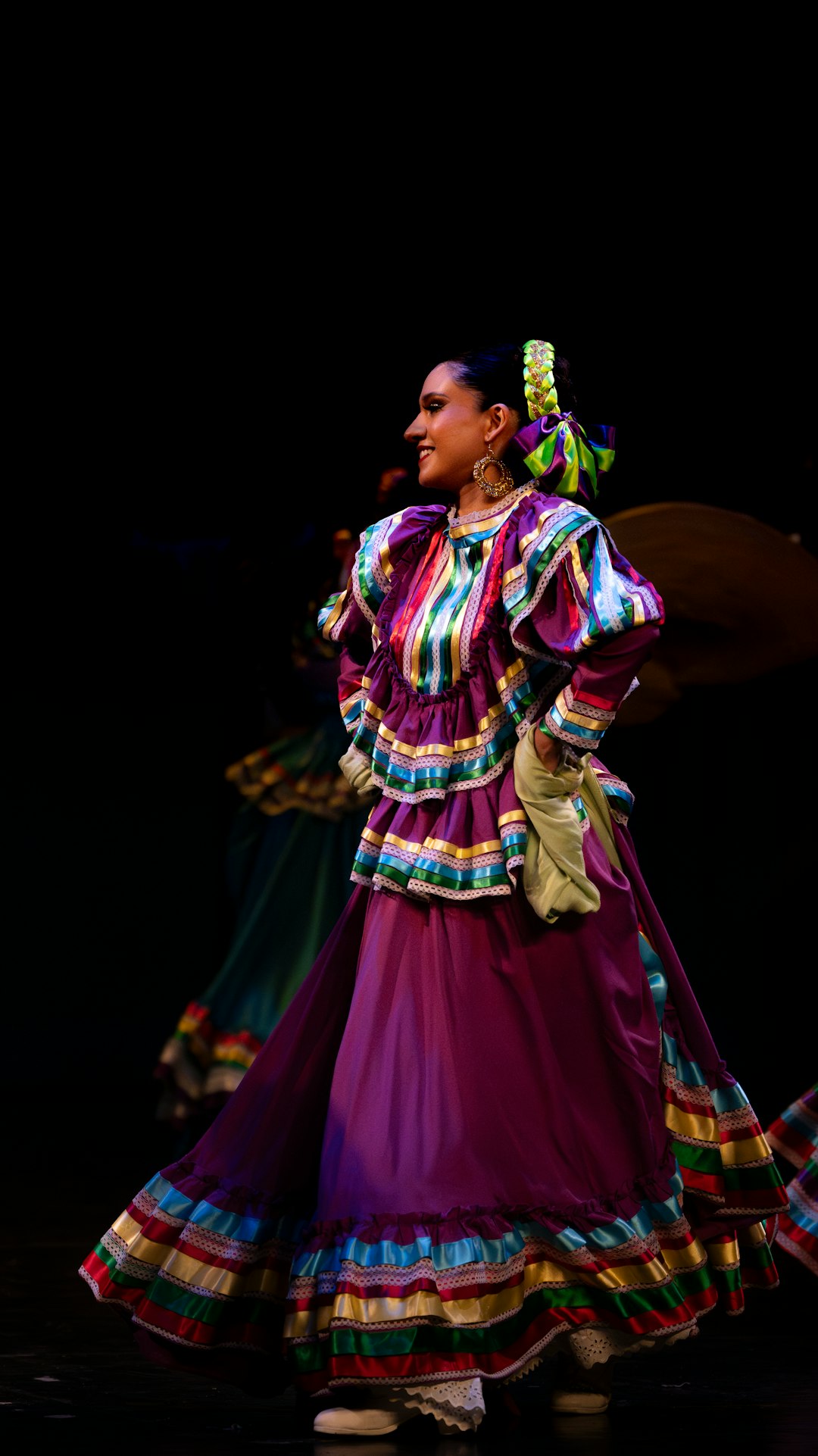
Sequins catch light. Bold patterns demand attention. Architectural silhouettes photograph memorably. But tango's intimacy requires your partner—and your own internal focus—to remain primary.
Flashy attire creates a paradox: the better it works visually, the more it risks distracting from the movement that should generate impact. Professional performers sometimes require visual punch to reach distant theater seats. Social dancers rarely face this constraint.
Strategic restraint:
- Color psychology: Deep jewel tones, sophisticated neutrals, and limited metallic accents photograph well without overwhelming. Reserve high-contrast patterns for venues where you'll remain visually distinct from your partner.
- Embellishment placement: Detail that moves with your body (fringe, subtle beading) enhances motion; static ornamentation (large appliqués, rigid structure) competes with it.
- Partner visibility: Consider how your color choice affects your partner's ability to track your movement. Solid darks can disappear in dim milonga lighting; strategic sheen or lighter accents maintain legibility.
Let your dancing supply the drama. Your clothes should frame it, not replace it.
Mistake 5: Ignoring Your Body's Engineering
Tango generates heat. An active milonga produces sustained cardiovascular demand—elevated heart rate, perspiration, temperature regulation needs. Cotton absorbs and holds moisture. Synthetics without wicking properties trap heat. The wrong fabric leaves you clammy, chilled, or visibly distressed.
Material specifications that work:
| Fabric | Properties | Best For |
|---|