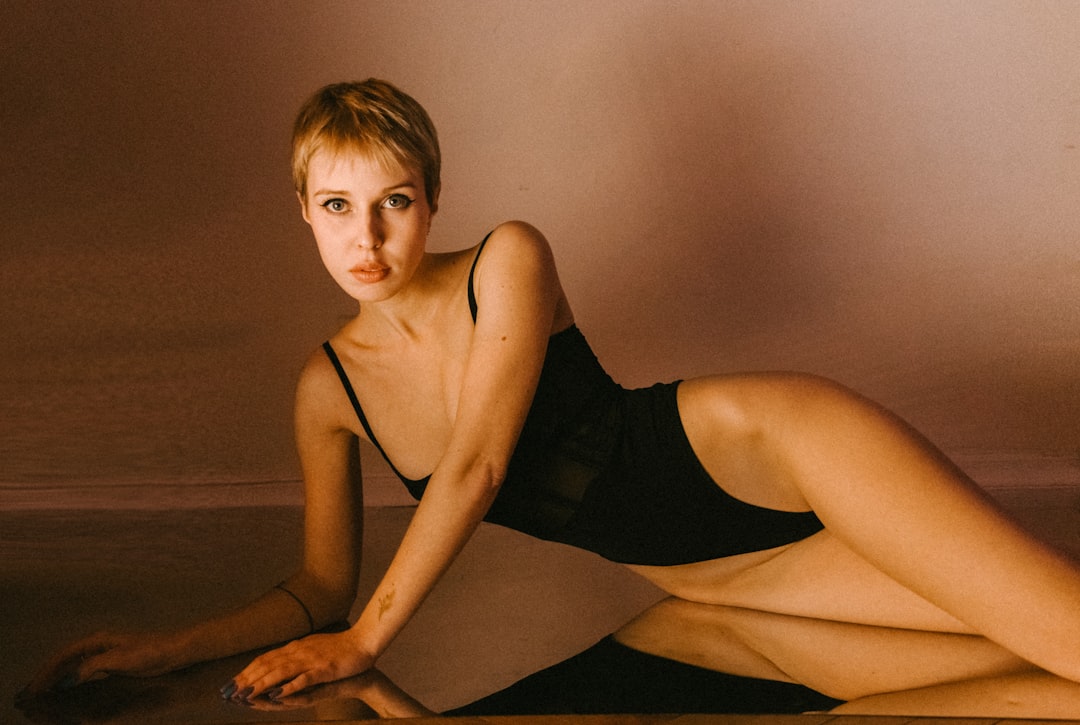
When Rocío Molina plunges to the floor in Bosque Ardora, her body doesn't stop at the vertical plane that traditional flamenco guards so fiercely. She rolls, she crawls, she seems to liquefy—then snaps back to her feet with the precision of a switchblade. The audience gasps. Somewhere in the darkness, a purist scowls.
This is flamenco fusion: not a gentle evolution but a contested, explosive reimagining of an art form that spent centuries defending its borders.
The Sound of Collision
The fusion movement found its footing in the 1980s, when Paco de Lucía's Live in America tour smashed through conventions by pairing his lightning-fast rasgueado with Cuban congas and jazz saxophone. The guitarist received death threats. He also sold millions of records and opened a door that cannot be closed.
Today's sonic landscape is even more anarchic. At a 2019 performance in Madrid's Teatros del Canal, Israel Galván shared the stage with a cantaor, a string quartet, and a modular synthesist whose electronic pulses seemed to argue with the human voice. "The rhythm section doesn't accompany me," Galván told El País afterward. "It interrogates me."
This friction produces moments of genuine strangeness: a bulería tempo accelerated to drum-and-bass velocity, or a soleá melody stretched across ambient drone until it becomes almost unrecognizable. The risk is dilution. The reward is discovering what survives when everything ornamental burns away.
When Bodies Betray Tradition
Traditional flamenco erects its dancer like a column—spine straight, weight dropped into the earth, arms carving space with mathematical clarity. Fusion choreographers systematically violate these principles.
María Pagés, whose company Nuevo Ballet Español has toured globally since 1990, describes her process as "teaching my flamenca body to forget." In works like Canciones, her dancers execute flamenco footwork while executing contemporary releases that send torsos folding, spiraling, collapsing. The effect is architectural: you see the scaffolding of tradition holding up impossible geometries.
The technical demands are brutal. A dancer must maintain the percussive precision of zapateado—heels striking floorboards in machine-gun bursts, sometimes exceeding 180 beats per minute—while simultaneously managing the fluid weight shifts of release technique. "It's like playing two instruments at once," says Pagés. "And one of them is trying to destroy the other."
Whose Stories, Whose Stage?
The article of faith in fusion circles holds that hybrid forms can narrate experiences that traditional flamenco cannot access. This claim requires careful handling. Flamenco already contains multitudes: the siguiriya carries centuries of Romani displacement, the tangos of Cádiz encode working-class resistance, the bamberas channel maternal grief.
What fusion offers is not new narrative capacity but new positions from which to narrate. Choreographer Patricia Guerrero, born in Granada in 1989, uses electronic music and club aesthetics in Catedral to examine what it means to inherit flamenco as a young woman in post-Franco Spain—neither the victim of cante jondo mythology nor the liberated subject of secular modernity, but something messier in between.
Similarly, companies like Barcelona's La Fura dels Baus have employed flamenco fusion to address colonial history, placing zapateado in dialogue with Afro-Caribbean movement vocabularies that traditional flamenco has often erased or appropriated. These works generate controversy precisely because they expose fault lines: Who owns flamenco? Who gets to transform it?
The Resistance
Not everyone applauds. The peñas—traditionalist clubs that function as flamenco's gatekeepers—have long viewed fusion as contamination. In 2018, the Cátedra de Flamencología at the University of Córdoba published a polemic arguing that hybrid forms "dissolve the duende in technical exhibitionism," substituting novelty for the spiritual crisis that theorist Federico García Lorca identified as flamenco's essence.
The charge stings because it contains truth. Much fusion is superficial: a flamenco costume here, a sampled compás there, marketing gloss over genuine engagement. The difference between evolution and pastiche often comes down to duration—whether the artist has spent years mastering traditional forms before attempting their destruction.
Galván, whose father was a cantaor and whose training began at age five, puts it sharply: "You cannot break a grammar you never learned."